Поискване на обаждане:
+86-17705556919
Онлайн поддръжка
Поискване на обаждане:
Онлайн поддръжка

В средите с висока интензивност като автомобилните сборъчни линии, структурните стоманени каркаси и тежкото строителство разходите при повреда на отвертка не се ограничават само до цената на самата отвертка. Те включват разходите за просто стояне, извадени глави на винтове и компрометирана структурна цялост.
Макар много техници да обвиняват настройките на въртящия момент на ударната отвертка, основната причина обикновено се крие в две металургични променливи: Марка стомана и Точност на термичната обработка.
В йерархията на инструменталните стомани, Стомана S2 (устойчива на удари) е проектирана специално за приложения, при които високият въртящ момент се комбинира с повтарящи се ударни натоварвания. За разлика от стандартните хром-ванадиеви (Cr-V) или високовъглеродни стомани, S2 съдържа сплави от молибден, силиций и ванадий, за да се получи по-висококачествена молекулярна структура.
За B2B купувачи и индустриални дистрибутори посочването на стомана S2 е първата стъпка към намаляване на явлението „излизане от главата на винта“ (изплъзване на свредела от главата на винта) и удължаване на цикъла за подмяна на строителната площадка. 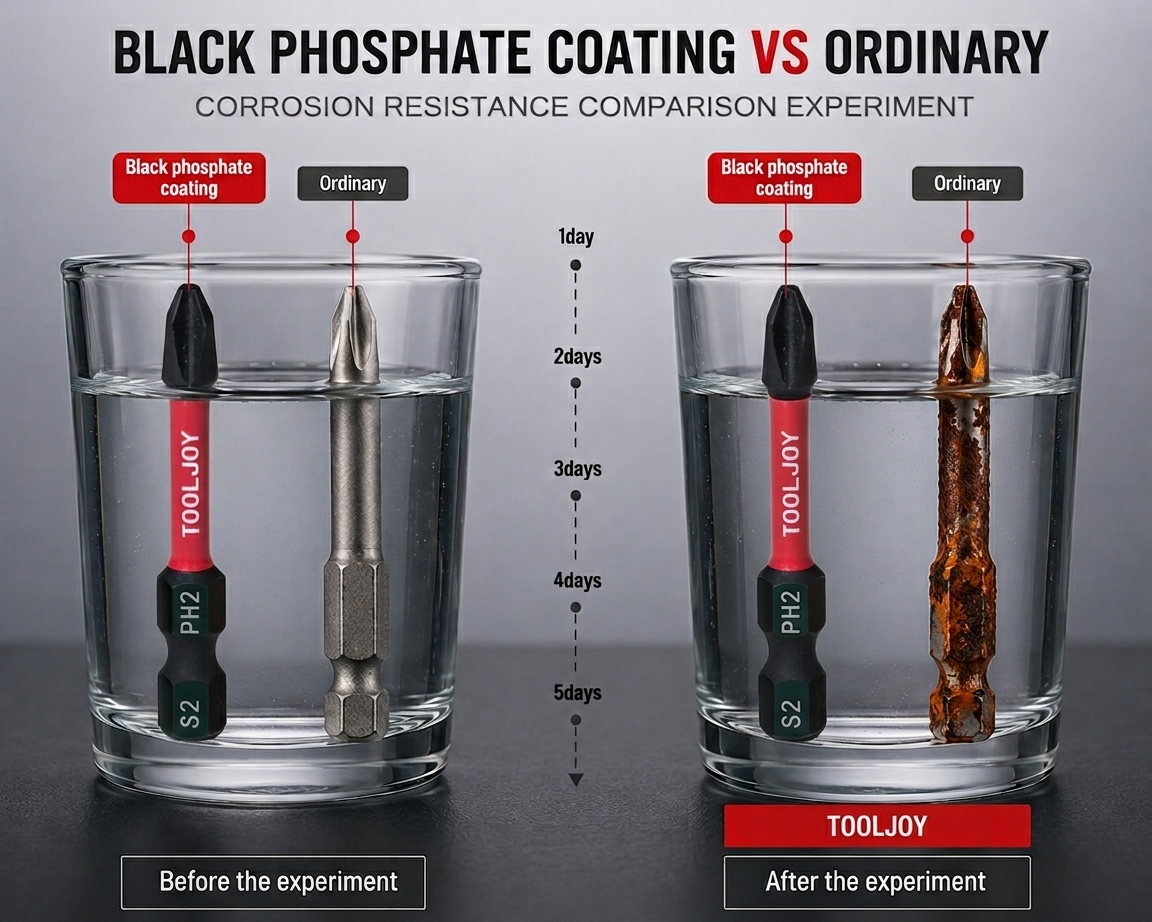
Висококачественият суров материал е само половината от уравнението. Процесът на термична обработка — по-специално Гасене и отпускане — определя крайните механични свойства на свредела.
АТ TOOLJOY , нашите фабрични протоколи подчертават точно зададен диапазон на твърдост, обикновено HRC 58–62 , който е „златната зона“ за инструменти, предназначени за работа с ударно натоварване.
Експертно мнение: Професионален връх изисква Диференцирана термична обработка — по-твърд връх за по-добра устойчивост на износване и леко по-издръжлив, по-еластичен ствол, за по-добро поглъщане на вибрации и удари.
Идентифицирането на причината за повреда на свредела е ключово за оптимизиране на вашата стратегия за набавки. Индустриалните потребители трябва да търсят тези четири технически предупредителни признаци:
| Режим на отказ | Основна причина | Влияние върху ефективността |
| Закръгляне на върха | Недостатъчна твърдост на повърхността (мека стомана) | Високи нива на излизане от винта (cam-out); моментално разрушава главите на винтовете. |
| Крехко счупване | Неправилно закаляване; прекомерно вътрешно напрежение | Изведнъж счупване на инструмента; висок риск за безопасността на операторите. |
| Умора при усукване | Лоша еластичност на стоманата (често се среща при свределите от Cr-V) | Свределът се усуква и деформира необратимо под товар. |
| Откъртване на повърхността | Лошо покритие или окисление по време на термична обработка | Увеличено триене; лошо прилягане в главата на винта. |
Стандартните отвертки за битова употреба са проектирани за случайна употреба от любители при работа с меки дървесни материали. Промишленото закрепване — например завиването на самонарезни винтове в стоманени плочи с дебелина 5 мм — генерира огромно количество топлина и механично напрежение.
При липса на сплав S2 и контролирана термична обработка енергията от ударната отвертка се превръща в топлина, която бързо достига температурата на отпускане на стоманата. Това постоянно намалява твърдостта на отвертката, правейки я безполезна за минути.
За промишлените купувачи закупуването само според най-ниската цена за единица често е скрит разход.
Продължителността на експлоатацията на свределите е наука, а не променлива. Като поставят на първо място Стомана S2 и валидирани протоколи за термична обработка , промишлените операции могат да завиват повече винтове с по-малко инструменти. Когато стоманата е подходяща и термичната обработка е прецизна, инструментът става актив за производителност, а не разходен елемент с ограничена жизнена продължителност.
① Какъв е най-добрият материал за битове за ударни отвертки ?Стомана S2 се счита широко за най-добрия материал поради високата ѝ устойчивост на ударни натоварвания и способността ѝ да поема висок въртящ момент без да се чупи.
② Каква твърдост по скалата HRC трябва да има битът на отвертката? За промишлени въртящи се насадки за ударни отвертки оптималният баланс между износостойкост и твърдост се постига при твърдост в диапазона HRC 58–62.
③ Защо моите насадки за отвертки постоянно се чупят? Повечето насадки се чупят поради лошо термично обработване (което ги прави прекалено крехки) или поради използването на стомана Cr-V по-ниско качество, която не може да издържи бързите удари на ударна отвертка.
 Горещи новини
2026-09-17
2026-09-10
2026-09-05
2026-09-01
2026-08-26
2026-08-26
 EN
EN