Đang yêu cầu gọi điện:
+86-17705556919
Hỗ trợ trực tuyến
Đang yêu cầu gọi điện:
Hỗ trợ trực tuyến

Trong các môi trường công nghiệp có cường độ cao—như dây chuyền lắp ráp ô tô, khung thép kết cấu và xây dựng hạng nặng—chi phí do đầu tuốc-nơ-vít bị hỏng gây ra không chỉ đơn thuần là giá trị của chính đầu tuốc-nơ-vít đó. Đó còn là chi phí do thời gian ngừng hoạt động, đầu vít bị trượt ren và độ bền cấu trúc bị suy giảm.
Mặc dù nhiều kỹ thuật viên đổ lỗi cho cài đặt mô-men xoắn của máy siết bắn, nhưng nguyên nhân gốc rễ thường nằm ở hai yếu tố về luyện kim: Loại thép và Độ chính xác trong xử lý nhiệt.
Trong hệ thống phân cấp các loại thép làm dụng cụ, Thép S2 (chống sốc) được thiết kế đặc biệt cho các ứng dụng đòi hỏi mô-men xoắn cao kết hợp với va đập lặp đi lặp lại. Khác với thép crôm-vanadi (Cr-V) tiêu chuẩn hoặc thép cacbon cao, thép S2 được hợp kim hóa với molypden, silic và vanadi nhằm tạo ra một cấu trúc phân tử vượt trội.
Đối với người mua B2B và nhà phân phối công nghiệp, việc chỉ định sử dụng thép S2 là bước đầu tiên nhằm giảm thiểu hiện tượng "trượt cam" (mũi khoan trượt ra khỏi đầu vít) và kéo dài chu kỳ thay thế tại công trường. 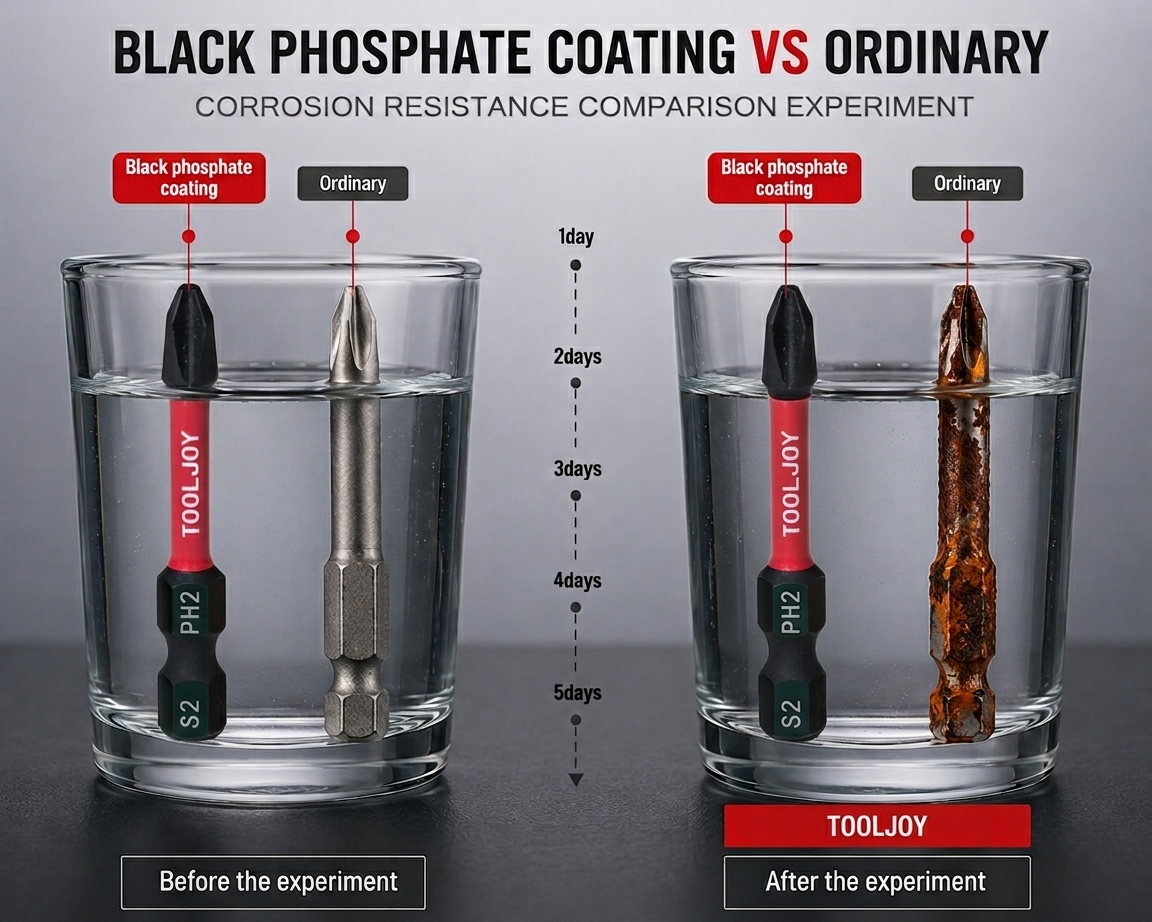
Nguyên vật liệu thô chất lượng cao mới chỉ chiếm một nửa phương trình. Quy trình xử lý nhiệt—cụ thể là Luyện và nhiệt điều —quyết định các tính chất cơ học cuối cùng của mũi khoan.
ATTOOLJOY , các quy trình nhà máy của chúng tôi nhấn mạnh vào dải độ cứng chính xác, thường là HRC 58–62 , đây là "vùng 'vừa phải'" dành cho các dụng cụ đạt tiêu chuẩn chịu va đập.
Nhận Định Chuyên Gia: Một mũi khoan cao cấp dành cho chuyên gia đòi hỏi Nhiệt luyện vi phân — phần đầu cứng hơn để tăng khả năng chống mài mòn, và phần thân hơi dai hơn, linh hoạt hơn nhằm hấp thụ rung động và sốc.
Xác định nguyên nhân khiến mũi khoan bị hỏng là chìa khóa để tối ưu hóa chiến lược mua sắm của bạn. Người dùng công nghiệp nên lưu ý bốn dấu hiệu kỹ thuật cảnh báo sau:
| Chế độ hư hỏng | Nguyên nhân gốc rễ | Tác động đến Hiệu suất |
| Làm tròn đầu mũi khoan | Độ cứng bề mặt không đủ (thép mềm) | Tỷ lệ tuột vít cao; làm trượt đầu vít ngay lập tức. |
| Gãy giòn | Nhiệt luyện không đúng cách; ứng suất nội bộ quá lớn | Gãy đột ngột dụng cụ; rủi ro an toàn cao cho người vận hành. |
| Mỏi xoắn | Độ đàn hồi kém của thép (thường gặp ở mũi khoan Cr-V) | Mũi khoan xoắn và biến dạng vĩnh viễn dưới tải. |
| Bong tróc bề mặt | Lớp phủ kém hoặc bị oxy hóa trong quá trình nhiệt luyện | Ma sát tăng; độ lắp ghép không chính xác ở đầu vít. |
Các mũi vít tiêu chuẩn dành cho người tiêu dùng được thiết kế để sử dụng thỉnh thoảng trong các công việc tự làm (DIY) trên gỗ mềm. Việc siết chặt các loại vít tự khoan vào tấm thép dày 5 mm—một yêu cầu phổ biến trong lắp ráp công nghiệp—tạo ra lượng nhiệt và ứng suất cơ học rất lớn.
Nếu không sử dụng hợp kim đặc chủng S2 và quy trình nhiệt luyện được kiểm soát chặt chẽ, năng lượng từ máy siết vít chạy bằng va đập sẽ chuyển thành nhiệt, nhanh chóng đạt đến nhiệt độ tôi của thép. Điều này làm mềm vĩnh viễn mũi vít, khiến nó trở nên vô dụng chỉ trong vài phút.
Đối với các nhà mua công nghiệp, việc lựa chọn sản phẩm dựa trên giá đơn vị thấp nhất thường là một khoản chi phí tiềm ẩn.
Tuổi thọ mũi khoan là một lĩnh vực khoa học, chứ không phải một yếu tố biến đổi. Bằng cách ưu tiên Thép công cụ S2 và các quy trình tôi luyện đã được xác thực , các hoạt động công nghiệp có thể siết nhiều vít hơn với ít dụng cụ hơn. Khi loại thép phù hợp và quá trình tôi luyện chính xác, dụng cụ sẽ trở thành tài sản hiệu suất thay vì một vật tiêu hao gây rủi ro.
① Vật liệu tốt nhất cho mũi tô-vít va đập ?Thép công cụ S2 được coi rộng rãi là vật liệu tốt nhất nhờ khả năng chịu sốc cao và khả năng chịu mô-men xoắn lớn mà không bị gãy.
② Độ cứng HRC của mũi tô-vít nên ở mức nào? Đối với các đầu vít chuyên dụng cho công nghiệp, độ cứng trong khoảng HRC 58–62 mang lại sự cân bằng tối ưu giữa khả năng chống mài mòn và độ bền va đập.
③Tại sao các đầu vít của tôi liên tục bị gãy? Hầu hết các đầu vít bị gãy là do xử lý nhiệt kém (làm chúng quá giòn) hoặc do sử dụng thép Cr-V cấp thấp, không đủ khả năng chịu được các cú đánh nhanh liên tục từ máy siết mô-men xoắn kiểu va đập.
 Tin nóng
2026-09-17
2026-09-10
2026-09-05
2026-09-01
2026-08-26
2026-08-26
 EN
EN