
 EN
EN
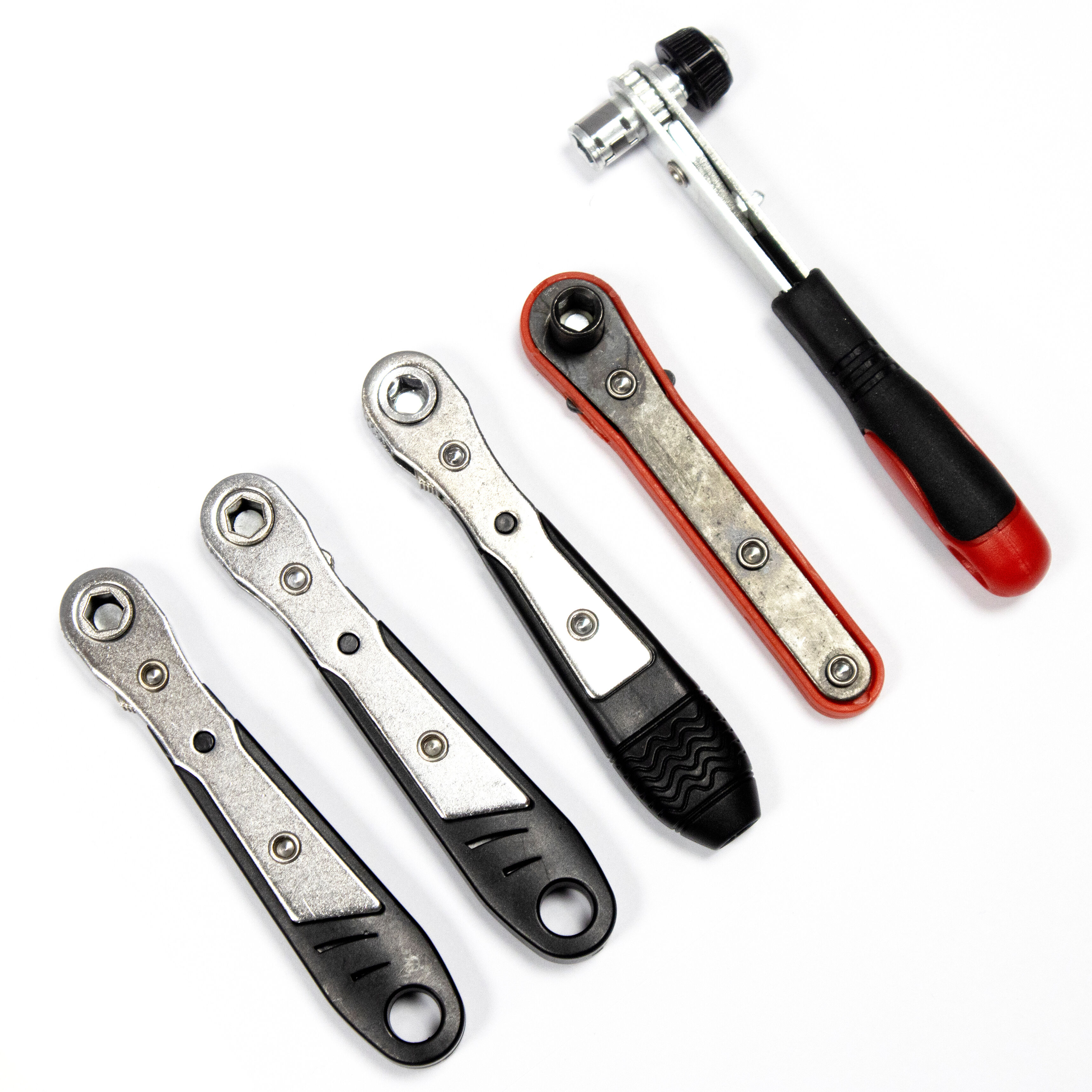
Working in confined spaces presents unique challenges for mechanics, technicians, and DIY enthusiasts who rely on precision tools to complete their tasks efficiently. The selection of the right ratchet wrench becomes critical when access is limited and traditional tools simply cannot reach the target fasteners. Understanding which type of ratchet wrench performs best in tight working environments can significantly impact productivity, reduce frustration, and ensure professional-quality results in demanding applications.
Modern automotive repair, industrial maintenance, and precision assembly work frequently require access to fasteners located in cramped quarters where conventional tools fail to provide adequate clearance. The evolution of ratchet wrench designs has led to specialized variants specifically engineered to overcome spatial constraints while maintaining the mechanical advantage and reliability that professionals demand. These space-saving solutions incorporate innovative features that maximize functionality within minimal working envelopes.
Low Profile Ratchet Wrench Designs
Stubby Handle Construction
The stubby ratchet wrench represents one of the most effective solutions for extremely tight spaces where standard-length handles cannot fit. These compact tools typically feature handles that are 40-60% shorter than traditional designs, allowing operators to work in confined areas while still maintaining adequate leverage for most fastening applications. The reduced handle length requires careful engineering to ensure the internal ratcheting mechanism remains durable and precise despite the space constraints.
Professional-grade stubby ratchet wrench models incorporate high-tooth-count mechanisms that provide finer incremental movements, compensating for the reduced swing arc that naturally occurs in tight spaces. This design approach enables users to achieve the same fastening torque with smaller handle movements, making them particularly valuable for automotive engine compartments, aircraft maintenance, and industrial equipment servicing where clearance is severely limited.
Ultra-Thin Head Profiles
The head thickness of a ratchet wrench directly impacts its ability to access fasteners in narrow gaps and recessed locations. Ultra-thin head designs reduce the overall profile to as little as 8-10mm in height, compared to standard models that typically measure 15-20mm. This reduction in vertical clearance requirements opens up access to fasteners that would otherwise be completely inaccessible with conventional tools.
Manufacturing ultra-thin ratchet wrench heads requires advanced metallurgy and precision engineering to maintain strength and durability while minimizing material thickness. These tools often incorporate hardened steel alloys and specialized heat treatment processes to ensure the reduced cross-sectional area can still withstand the torsional forces encountered in demanding applications without premature failure or excessive wear.
Flexible and Articulating Ratchet Systems
Universal Joint Integration
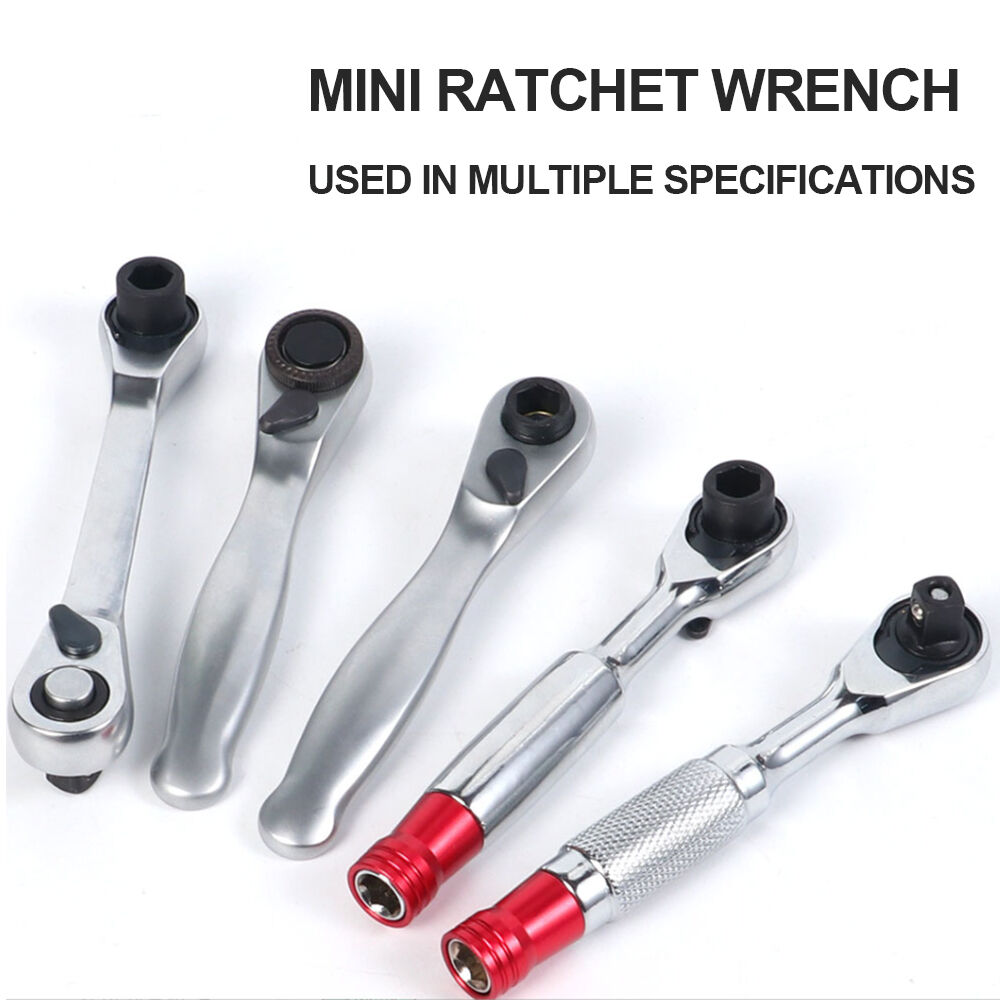
Universal joint ratchet wrench designs provide angular flexibility that allows the tool to navigate around obstacles and work at compound angles that would be impossible with rigid tools. The integrated universal joint typically allows for 15-30 degrees of articulation in multiple directions, enabling access to fasteners positioned at awkward angles or partially obscured by surrounding components.
The mechanical complexity of universal joint ratchet wrench systems requires careful consideration of backlash, wear characteristics, and torque transmission efficiency. High-quality designs minimize play in the joint while ensuring smooth operation throughout the full range of motion. This flexibility proves particularly valuable in automotive transmission work, HVAC installations, and machinery maintenance where fasteners are often positioned at challenging angles.
Flexible Shaft Extensions
Flexible shaft extensions transform a standard ratchet wrench into a versatile tool capable of reaching around corners and through complex geometries. These extensions typically consist of a series of ball joints or a flexible steel cable enclosed in a protective sheath, allowing the tool to bend and conform to the available space while maintaining torque transmission capabilities.
The length of flexible extensions varies from compact 6-inch models for moderate access challenges to extended 18-inch versions for deep, complex assemblies. Professional users often select ratchet wrench sets that include multiple extension options to handle diverse access requirements efficiently. The key performance factors include flexibility, torque capacity, and durability under repeated bending cycles.
Specialized Tight Space Applications
Automotive Engine Bay Access
Modern vehicle engine compartments present increasingly challenging access scenarios due to compact packaging and complex component layouts. The selection of appropriate ratchet wrench types for automotive applications depends on specific access requirements, fastener types, and torque specifications. Engine work often requires a combination of different ratchet wrench styles to address the variety of spatial constraints encountered.
Typical automotive tight space scenarios include accessing alternator mounting bolts, starter motor fasteners, and transmission components where clearance is measured in millimeters rather than inches. Professional mechanics rely on specialized ratchet wrench designs that can navigate these constraints while providing reliable torque application and fastener engagement. The choice between stubby, flexible, or low-profile designs often depends on the specific vehicle make and model requirements.
Industrial Equipment Maintenance
Industrial maintenance applications present unique challenges where ratchet wrench selection must consider not only space constraints but also environmental factors such as temperature, chemical exposure, and vibration. Manufacturing equipment, processing machinery, and power generation systems often require maintenance in extremely confined spaces where access is limited by safety considerations as well as physical constraints.
The industrial environment demands ratchet wrench tools that can withstand harsh conditions while providing reliable performance in tight quarters. Corrosion-resistant materials, sealed mechanisms, and enhanced durability become critical factors in tool selection. Many industrial applications also require specific torque specifications that must be achieved despite the spatial limitations, making the mechanical advantage of the ratchet wrench design particularly important.
Material and Construction Considerations
High-Strength Alloy Requirements
The reduced material cross-sections inherent in tight-space ratchet wrench designs place additional demands on material selection and manufacturing processes. High-strength steel alloys, often incorporating chromium, vanadium, or molybdenum, provide the necessary strength-to-weight ratios required for compact tool construction. These materials must maintain their properties under the stress concentrations that occur in reduced-section designs.
Advanced manufacturing techniques such as forging, precision machining, and controlled heat treatment processes ensure that compact ratchet wrench designs achieve the durability standards expected in professional applications. The material selection process must balance strength, toughness, and corrosion resistance while maintaining the fine tolerances required for smooth ratcheting action in space-constrained mechanisms.
Surface Treatment and Protection
Surface treatments for tight-space ratchet wrench applications serve multiple purposes beyond basic corrosion protection. Chrome plating, nickel coating, or specialized ceramic treatments provide smooth surfaces that facilitate tool insertion and removal in confined areas while protecting against environmental degradation. These treatments also contribute to the professional appearance and longevity expected from quality tools.
The surface finish quality becomes particularly important in tight-space applications where any surface irregularities can cause binding or interference during tool positioning. Mirror-finish chrome plating or precision-ground surfaces ensure smooth operation even when working tolerances are minimal. Some specialized ratchet wrench designs incorporate low-friction coatings that further enhance performance in challenging access situations.
Selection Criteria for Specific Applications
Clearance Analysis and Tool Matching
Proper selection of a ratchet wrench for tight space applications requires careful analysis of the available working clearances and access angles. This evaluation process should consider not only the immediate fastener location but also the tool swing arc, handle clearance requirements, and socket engagement depth. Professional technicians often create clearance maps for complex assemblies to guide tool selection decisions.
The clearance analysis must account for three-dimensional constraints that may not be immediately obvious during initial assessment. Vertical clearance, horizontal swing space, and approach angles all influence the optimal ratchet wrench configuration. This systematic approach ensures that the selected tool will function effectively throughout the complete fastening or removal operation without encountering unexpected obstacles.
Torque Requirements and Tool Capacity
The reduced mechanical advantage inherent in compact ratchet wrench designs must be carefully matched to the torque requirements of the specific application. While space constraints may dictate a particular tool configuration, the fastener specifications ultimately determine whether that tool can successfully complete the required task. This balance between access and capability represents a critical decision point in tool selection.
Professional applications often require documented torque values that must be achieved regardless of access challenges. In these situations, the ratchet wrench selection process may need to consider alternative approaches such as flexible extensions, angle adapters, or specialized socket configurations that enable proper torque application within the available space constraints.
FAQ
What is the minimum clearance required for a stubby ratchet wrench?
Most stubby ratchet wrench designs require approximately 3-4 inches of clearance for effective operation, though this varies based on the specific handle length and socket size. The key consideration is ensuring adequate space for the minimal swing arc needed to operate the ratcheting mechanism, typically around 5-10 degrees of handle movement.
Can flexible ratchet wrench extensions handle high torque applications?
Quality flexible extensions can typically handle moderate torque levels, usually up to 50-75 ft-lbs depending on the design and length. However, excessive torque can cause premature wear or failure in the flexible joints, so critical high-torque applications may require rigid tool configurations or specialized torque-limiting devices.
How does the tooth count affect performance in tight spaces?
Higher tooth counts provide smaller ratcheting increments, which becomes crucial in tight spaces where handle swing is limited. A 72-tooth ratchet wrench requires only 5 degrees of movement compared to 15 degrees for a 24-tooth design, making high-tooth-count tools significantly more effective in severely constrained working environments.
Are there specific safety considerations for tight space ratchet work?
Working in tight spaces with ratchet wrench tools requires extra attention to hand and finger positioning to avoid injury from unexpected tool movement or contact with sharp edges. Proper lighting, secure grip maintenance, and awareness of potential pinch points become critical safety factors when working in confined areas where escape room is limited.