
 EN
EN
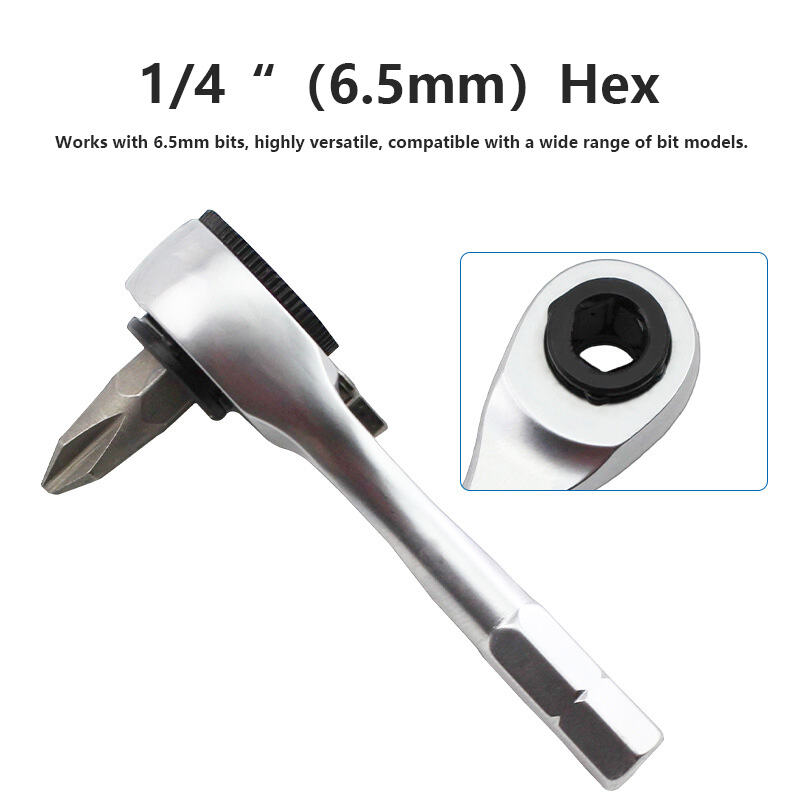
Industrial maintenance operations demand precision, efficiency, and reliability in every tool selection. A ratchet wrench serves as one of the most critical components in any maintenance professional's toolkit, offering the mechanical advantage necessary for tightening and loosening fasteners in confined spaces. The proper selection of this essential tool can significantly impact productivity, worker safety, and operational efficiency across manufacturing facilities, automotive service centers, and heavy industrial environments.
Understanding Ratchet Wrench Fundamentals
Mechanical Design and Operation Principles
The core functionality of a ratchet wrench relies on an internal pawl mechanism that allows rotation in one direction while preventing backward movement. This ingenious design enables continuous motion without requiring the operator to reposition the tool after each turn. Industrial-grade mechanisms feature hardened steel components with precise tolerances to withstand the high torque loads common in heavy-duty applications.
Modern ratchet wrench designs incorporate fine-tooth gear systems, typically ranging from 72 to 120 teeth per revolution. Higher tooth counts provide smaller engagement angles, allowing operation in extremely tight spaces where traditional wrenches would prove ineffective. The pawl engagement system must demonstrate exceptional durability under repetitive cycling, as industrial maintenance often requires thousands of operations per day.
Drive Size Classifications and Applications
Drive size selection forms the foundation of effective ratchet wrench specification for industrial environments. Quarter-inch drives excel in precision electronics work and small machinery maintenance, while three-eighths inch systems provide optimal balance for general mechanical applications. Half-inch drives dominate automotive and medium machinery maintenance, offering substantial torque capacity without excessive bulk.
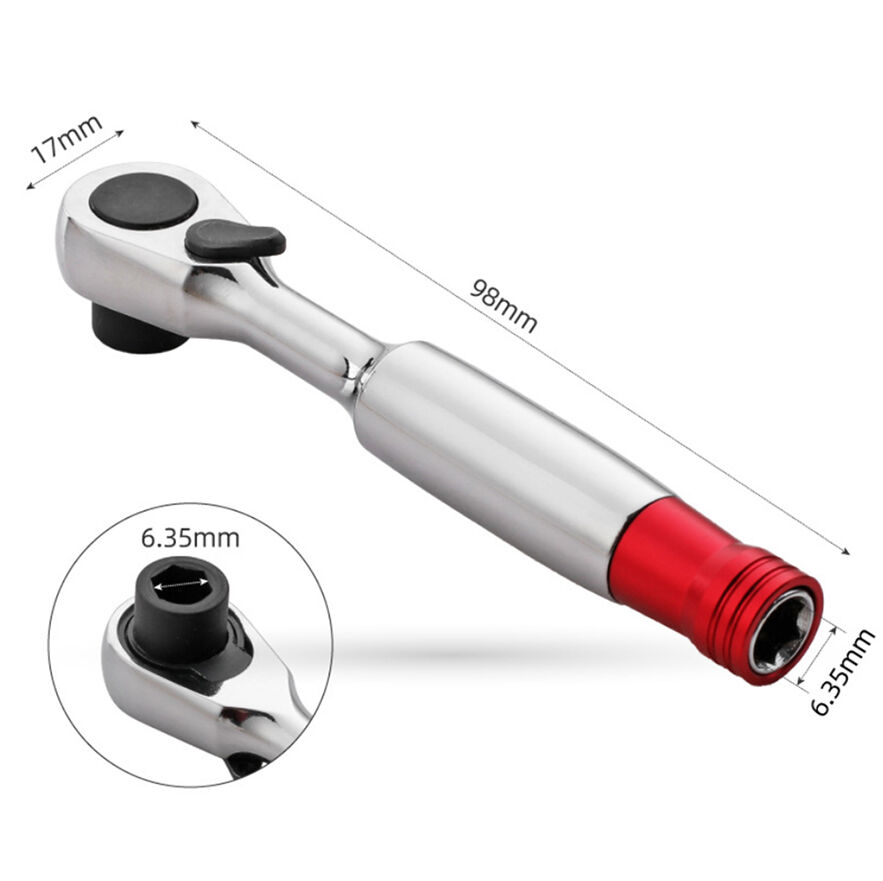
Three-quarter inch and one-inch drive ratchet wrench systems serve heavy industrial applications where maximum torque transmission becomes paramount. These larger systems typically feature reinforced housing construction and enhanced pawl mechanisms to handle the extreme forces encountered in pipeline maintenance, heavy equipment service, and structural assembly operations.
Material Construction and Durability Factors
Steel Composition and Heat Treatment Specifications
Premium ratchet wrench construction utilizes chrome vanadium steel alloys that provide exceptional strength-to-weight ratios and resistance to deformation under load. The heat treatment process involves precise temperature control during quenching and tempering phases to achieve optimal hardness levels throughout critical stress areas. Surface treatments such as chrome plating or black oxide coating provide corrosion resistance essential for harsh industrial environments.
Internal mechanism components require specialized metallurgy to ensure long-term reliability. Pawl springs must maintain consistent tension over millions of cycles, while gear teeth need sufficient hardness to resist wear without becoming brittle. Quality manufacturers employ vacuum heat treatment processes to eliminate impurities that could lead to premature failure in demanding applications.
Handle Ergonomics and Grip Design
Extended use in industrial maintenance demands exceptional ergonomic design to prevent operator fatigue and reduce injury risk. Modern ratchet wrench handles incorporate dual-density materials combining rigid core structures with soft elastomeric grips. The grip diameter, surface texture, and overall length must accommodate various hand sizes while providing secure control under oily or wet conditions.
Handle length directly affects torque multiplication and operator leverage capability. Longer handles generate greater mechanical advantage but may prove unwieldy in confined spaces common to industrial maintenance scenarios. The optimal balance varies by application, with adjustable or telescoping designs offering versatility for different operational requirements.
Performance Specifications and Selection Criteria
Torque Capacity and Load Ratings
Industrial maintenance applications often require specific torque values to ensure proper fastener installation and equipment safety. A quality ratchet wrench must demonstrate consistent torque transmission without slippage or mechanical failure across its rated capacity range. Manufacturers typically specify maximum torque ratings based on standardized testing protocols that simulate real-world loading conditions.
Working torque specifications should account for safety factors that prevent tool failure during unexpected overload situations. Professional-grade tools often feature torque ratings substantially higher than typical application requirements to provide operational safety margins. The ratchet wrench mechanism must maintain accuracy and reliability throughout its specified torque range without degradation in performance characteristics.
Precision and Backlash Considerations
Backlash represents the angular movement required to re-engage the pawl mechanism after direction reversal. Minimal backlash enables operation in extremely restricted spaces where traditional tools cannot function effectively. High-quality ratchet wrench designs achieve backlash angles as low as three degrees through precision manufacturing and tight component tolerances.
Consistent engagement pressure ensures reliable operation across varying temperature conditions and contamination levels typical in industrial environments. The mechanism should demonstrate smooth operation without binding or excessive play that could indicate premature wear or manufacturing defects affecting long-term reliability.
Socket Compatibility and System Integration
Socket Retention and Quick-Release Mechanisms
Efficient socket attachment and removal significantly impacts productivity in fast-paced maintenance operations. Modern ratchet wrench systems incorporate various retention mechanisms including ball-lock pins, magnetic holders, and spring-loaded detents. Each system offers distinct advantages depending on the specific application requirements and environmental conditions.
Quick-release mechanisms enable rapid socket changes without requiring two-handed operation or additional tools. These systems must balance secure retention during use with effortless release when socket changes become necessary. Industrial environments often involve vibration and impact loads that could cause inadequate retention systems to fail unexpectedly.
Universal Joint and Extension Compatibility
Complex machinery often requires access to fasteners positioned at awkward angles or depths beyond direct ratchet wrench reach. Universal joints and extension bars expand operational flexibility while maintaining torque transmission efficiency. Quality components feature precision machining to minimize backlash and power loss through the drive train.
Extension selection affects both reach capability and torque accuracy, as longer extensions may introduce flex that reduces effective torque transmission. Professional maintenance operations typically maintain comprehensive extension sets to address various access challenges without compromising fastening quality or operator safety during critical assembly procedures.
Environmental Considerations and Application Specific Requirements
Corrosion Resistance and Chemical Compatibility
Industrial maintenance environments expose tools to various corrosive substances including petroleum products, cleaning solvents, and atmospheric moisture. Effective ratchet wrench protection requires surface treatments that resist chemical attack while maintaining dimensional stability over extended service periods. Stainless steel construction or specialized coatings provide enhanced durability in corrosive environments.
Chemical compatibility becomes critical when tools contact process fluids or cleaning agents that could degrade protective finishes or internal mechanisms. Material selection must consider both immediate contact effects and long-term exposure scenarios that might compromise tool performance or safety characteristics during routine maintenance operations.
Temperature Performance and Thermal Cycling
Extreme temperature variations affect both material properties and operational characteristics of precision mechanical tools. A ratchet wrench must maintain consistent performance across temperature ranges commonly encountered in industrial facilities, from sub-zero outdoor maintenance to elevated temperatures near heat-generating equipment or processes.
Thermal cycling can cause differential expansion between dissimilar materials, potentially affecting mechanism precision or creating internal stress concentrations. Quality tools incorporate design features that accommodate thermal expansion while preserving operational accuracy and mechanical integrity throughout their service life.
Maintenance Requirements and Service Life Optimization
Lubrication Systems and Preventive Care
Regular maintenance extends ratchet wrench service life while ensuring consistent performance characteristics throughout operational periods. Internal mechanisms require periodic lubrication using appropriate grades and types compatible with environmental exposure conditions. Over-lubrication can attract contaminants that accelerate wear, while insufficient lubrication leads to increased friction and premature component failure.
Cleaning procedures must remove accumulated debris and contaminants without damaging sensitive internal components or protective finishes. Ultrasonic cleaning systems effectively remove embedded particles from gear teeth and pawl mechanisms, while solvent washing addresses petroleum-based contamination common in industrial maintenance applications.
Wear Pattern Analysis and Replacement Indicators
Understanding normal wear progression enables proactive replacement before tool failure occurs during critical maintenance operations. Pawl wear typically manifests as increased backlash or engagement difficulty, while gear tooth wear affects smooth operation and torque transmission accuracy. Regular inspection protocols should identify these wear indicators before performance degradation impacts maintenance quality.
Service life varies significantly based on application severity, maintenance frequency, and environmental exposure conditions. Heavy industrial use may require annual replacement, while moderate maintenance applications might achieve several years of reliable service with proper care and periodic inspection protocols.
Economic Considerations and Total Cost Analysis
Initial Investment versus Long-term Value
Premium ratchet wrench systems command higher initial purchase prices but often demonstrate superior cost-effectiveness through extended service life and reduced replacement frequency. Professional-grade tools typically feature enhanced durability, superior precision, and comprehensive warranty coverage that offset higher acquisition costs through improved operational efficiency and reduced downtime.
Total cost analysis should include factors beyond initial purchase price, incorporating productivity gains, reduced maintenance time, and decreased likelihood of fastener damage due to tool slippage or failure. Quality tools often enable faster work completion while reducing operator fatigue that could impact overall maintenance efficiency.
Standardization Benefits and Inventory Management
Standardizing on specific ratchet wrench platforms across maintenance operations provides several economic advantages including reduced inventory complexity, simplified training requirements, and improved parts availability. Consistent tool families enable interchangeable socket and accessory use while reducing the total number of spare parts required for comprehensive maintenance support.
Fleet standardization also facilitates bulk purchasing opportunities that can significantly reduce per-unit costs while ensuring consistent quality standards across all maintenance positions. Training efficiency improves when personnel become familiar with standardized tool operation and characteristics rather than adapting to multiple different systems.
Safety Considerations and Risk Management
Failure Mode Analysis and Prevention
Ratchet wrench failure during high-torque applications can result in serious operator injury or equipment damage. Common failure modes include pawl breakage, handle fracture, and drive square shear under excessive loading conditions. Understanding these failure mechanisms enables proper tool selection and application techniques that minimize risk exposure during maintenance operations.
Regular inspection protocols should identify potential failure indicators including unusual noise during operation, increased effort required for normal tasks, or visible damage to external components. Preventive replacement based on inspection findings prevents unexpected failures that could compromise operator safety or maintenance quality.
Proper Use Techniques and Training Requirements
Effective ratchet wrench operation requires understanding of proper loading techniques, torque application methods, and recognition of tool limitations in specific applications. Training programs should emphasize correct grip positions, appropriate force application, and recognition of conditions that exceed tool capabilities or create safety hazards.
Improper use techniques including excessive side loading, impact application, or operation beyond rated capacity can cause premature failure or create dangerous situations for maintenance personnel. Comprehensive training ensures personnel understand both operational capabilities and limitations while promoting safe work practices throughout maintenance operations.
FAQ
What drive size ratchet wrench works best for general industrial maintenance?
Three-eighths inch and half-inch drive systems provide optimal versatility for most industrial maintenance applications. The three-eighths inch size offers excellent balance between torque capacity and accessibility in confined spaces, while half-inch drives handle heavier fasteners common in machinery maintenance. Many facilities maintain both sizes to address the full range of maintenance requirements effectively.
How often should ratchet wrench mechanisms be serviced or replaced?
Service frequency depends on usage intensity and environmental conditions, but annual inspection should identify wear indicators requiring attention. Heavy-use applications may require more frequent evaluation, while moderate use typically achieves several years of reliable service. Replace tools showing increased backlash, difficult engagement, or any visible damage to ensure continued safety and performance.
What features indicate a quality ratchet wrench suitable for professional use?
Quality indicators include fine-tooth gear systems with 72 or more teeth, chrome vanadium steel construction, smooth operation without binding, minimal backlash angles, and comprehensive manufacturer warranties. Professional tools also feature ergonomic handles, reliable socket retention systems, and demonstrate consistent torque transmission across their rated capacity range.
Can the same ratchet wrench handle both metric and standard socket systems?
Yes, drive square dimensions remain standardized across measurement systems, allowing the same ratchet wrench to operate both metric and standard sockets of the same drive size. However, socket selection must match the specific fastener requirements, and torque specifications should follow appropriate standards for the measurement system being used in each application.
Table of Contents
- Understanding Ratchet Wrench Fundamentals
- Material Construction and Durability Factors
- Performance Specifications and Selection Criteria
- Socket Compatibility and System Integration
- Environmental Considerations and Application Specific Requirements
- Maintenance Requirements and Service Life Optimization
- Economic Considerations and Total Cost Analysis
- Safety Considerations and Risk Management
-
FAQ
- What drive size ratchet wrench works best for general industrial maintenance?
- How often should ratchet wrench mechanisms be serviced or replaced?
- What features indicate a quality ratchet wrench suitable for professional use?
- Can the same ratchet wrench handle both metric and standard socket systems?