Requesting a Call:
+86-18020171572
Online Support
Requesting a Call:
Online Support

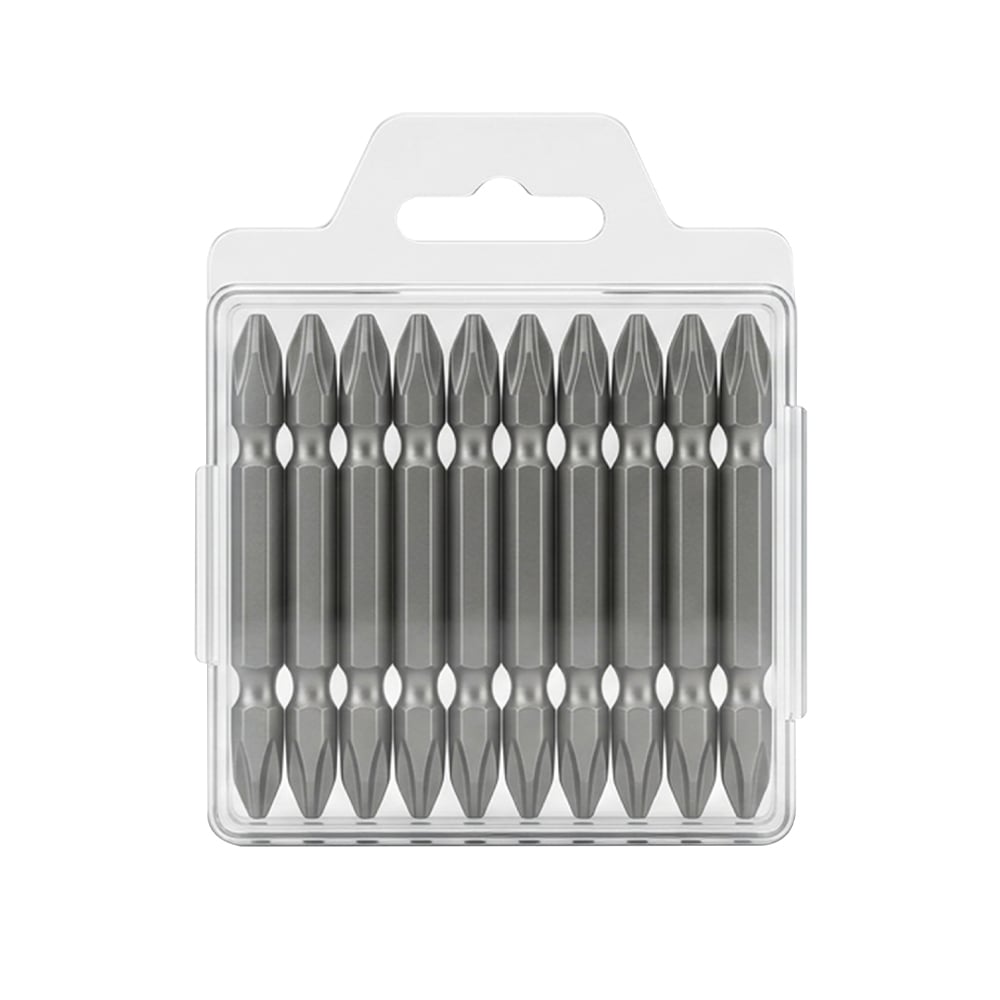
When sourcing double-ended screwdriver bits and holders together, matching the nominal hex size is only the starting point. The inserted tip needs sufficient clearance, the hexagonal section must engage correctly, and any locking feature must align with the holder’s mechanism.
These details explain why two bits with the same overall length may fit differently in the same holder.
When a double-ended bit is used in a holder, the inserted working tip needs enough clearance for the driving section to seat correctly.
Internal stops or magnets can limit the available depth. Shoulders or sleeves on the bit may also restrict insertion at the holder opening.
A 65 mm overall length does not describe this connection. Relevant dimensions include the distance from the inserted tip to the shoulder and retaining groove, where present.
For a PH/slotted configuration, the two tips have different shapes. Clearance should therefore be assessed with each end inserted.
The holder’s internal hexagonal socket engages the bit’s external hexagonal section to transmit torque. Clearance for the working tip and engagement of the hexagonal section are separate requirements.
Review the dimensions across the flats and the length of the hexagonal section intended to engage inside the holder. A reduced section, shoulder or sleeve must not prevent that section from reaching its intended position.
Excessive movement may involve dimensional clearance, insufficient engagement or wear. Assess both the bit and holder before identifying the cause.
Depending on the holder, retention may involve magnetic attraction, mechanical locking or both.
For a holder that locks into a retaining groove, the groove must align with the locking mechanism at the correct insertion depth. Its position, width and shape matter alongside the nominal hex size.
For example, a bit may enter the socket but reach an internal stop before its groove aligns with the lock. It can appear to fit while remaining unsecured.
Magnetic attraction does not correct this mismatch. TOOLJOY’s bit holder quality guidance also treats socket fit and retention as separate purchasing considerations.
The following details help define a suitable bit-and-holder combination. They can be reviewed using drawings, product specifications or physical samples.
| Connection Detail | What to review |
| Hexagonal section | Dimensions across the flats and intended engagement length |
| Inserted end | Tip shape and distance to relevant shoulders |
| Retaining groove, if used | Position, width and shape |
| Holder interior | Available insertion clearance and socket geometry |
| Retention mechanism | How the holder secures and releases the bit |
| External features | Sleeves or shoulders that may restrict insertion |
“65 mm double-ended bit” identifies the overall length, but leaves these connection requirements unresolved. A dimensioned drawing provides a clearer reference when one is available.
For matched sets, identify the proposed bit-and-holder combination during the enquiry stage. Provide the tip combination, bit length, intended application and any available drawings.
If drawings are unavailable, the existing holder model or a physical sample provides a starting point for evaluation. Photographs can help identify the configuration, although they cannot establish internal dimensions or confirm fit.
Evaluate both installation orientations before approving the pair. Retain the accepted component references and drawing revisions, and review compatibility when changes affect insertion or retention.
Physical fit does not establish suitability for impact use. Both the bit and holder must be appropriate for the intended operating conditions.
TOOLJOY’s one-stop sourcing offering includes screwdriver bits, other power tool accessories and hand tools. For enquiries involving matching bits and holders, share the components you currently use or the combination you need. This allows compatibility requirements to be included in product selection and order coordination.
No. It describes only part of the connection. Insertion clearance, hex engagement and retention geometry must also match.
Yes. A holder model reference can help identify the design, while a physical sample allows direct fit assessment. Photographs alone cannot confirm internal clearance or locking engagement.
Yes. Matching length and tip designations do not establish identical connection dimensions. Evaluate the replacement bit in the existing holder, in both orientations, before approving the combination.
 Hot News
2026-11-20
2026-11-18
2026-11-13
2026-11-11
2026-10-28
2026-10-26
 EN