Requesting a Call:
+86-17705556919
Online Support
Requesting a Call:
Online Support

When buyers evaluate power tool accessories, performance is often judged by individual product strength or short-term testing results. In many cases, attention is focused on hardness values, torque limits, or cutting efficiency of a single sample. In real-world professional use, however, long-term reliability depends just as much on consistency as on peak performance.
A single high-performing sample offers limited value if product behavior varies from batch to batch. For distributors, OEM partners, and professional users, inconsistent performance can lead to installation issues, warranty claims, and unpredictable user experience. As a result, quality control has become a defining factor in supplier selection for power tool accessories.
For manufacturers supplying a full range of power tool accessories, quality control is not a final inspection step—it is an integrated system that operates throughout the entire production cycle. From material selection to final shipment, quality control ensures that accessories perform consistently across different product categories, production volumes, and delivery timelines.
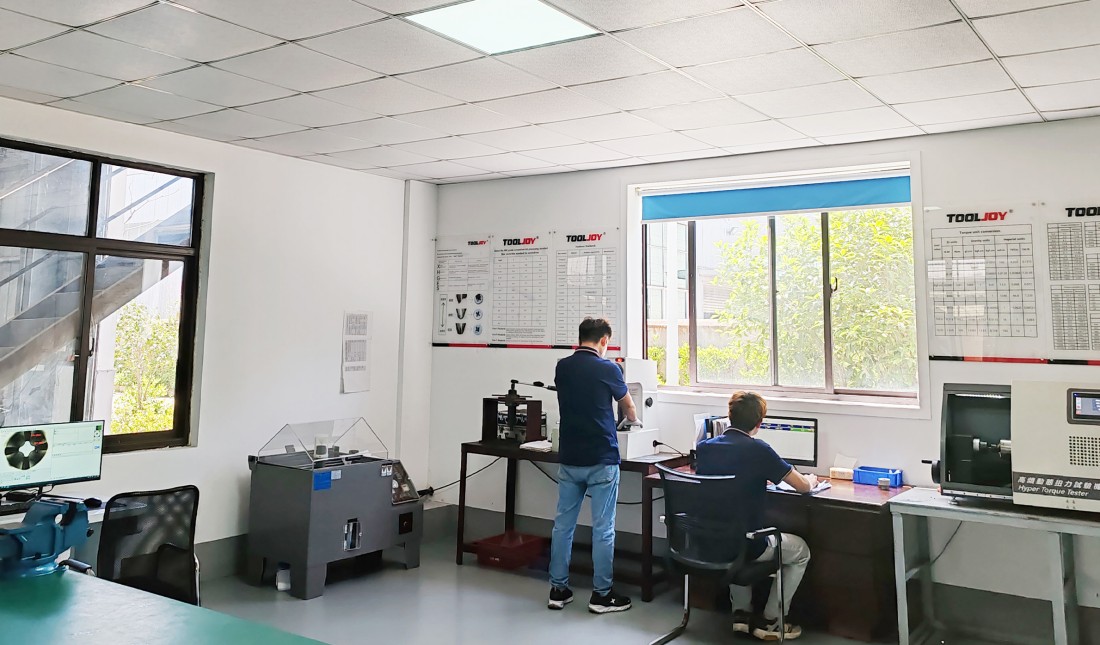
Quality consistency does not begin on the production line. It starts much earlier, with raw material sourcing, supplier qualification, and incoming inspection.
Different power tool accessories place different demands on steel composition and mechanical properties. Impact bits require controlled toughness and impact resistance, drill bits depend on cutting stability and edge retention, while extension rods and adapters must tolerate repeated torsional stress without permanent deformation. To support these varying requirements, incoming materials are evaluated for chemical composition, hardness potential, grain structure, and internal uniformity before entering production.
Material inspection at this stage helps eliminate variability that could otherwise affect CNC machining accuracy, heat treatment response, and final performance. By establishing a stable and predictable material baseline, TOOLJOY creates the conditions necessary for consistent downstream processing. This early-stage control reduces corrective actions later in production and improves overall manufacturing efficiency.
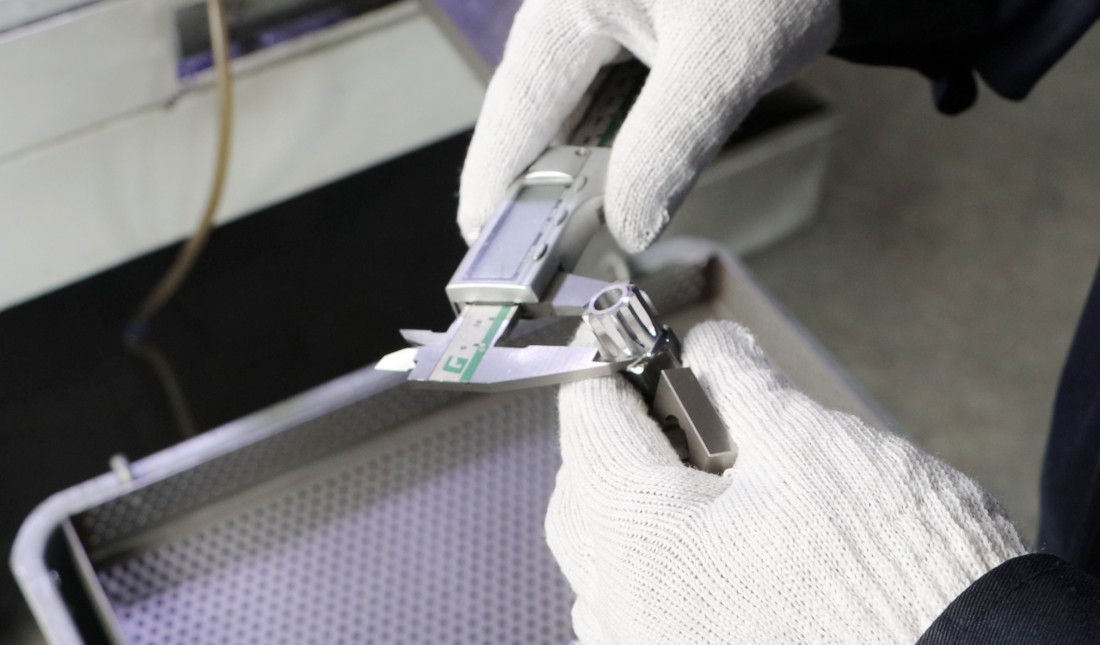
Manufacturing power tool accessories at scale requires more than advanced machinery—it requires continuous monitoring and process discipline.
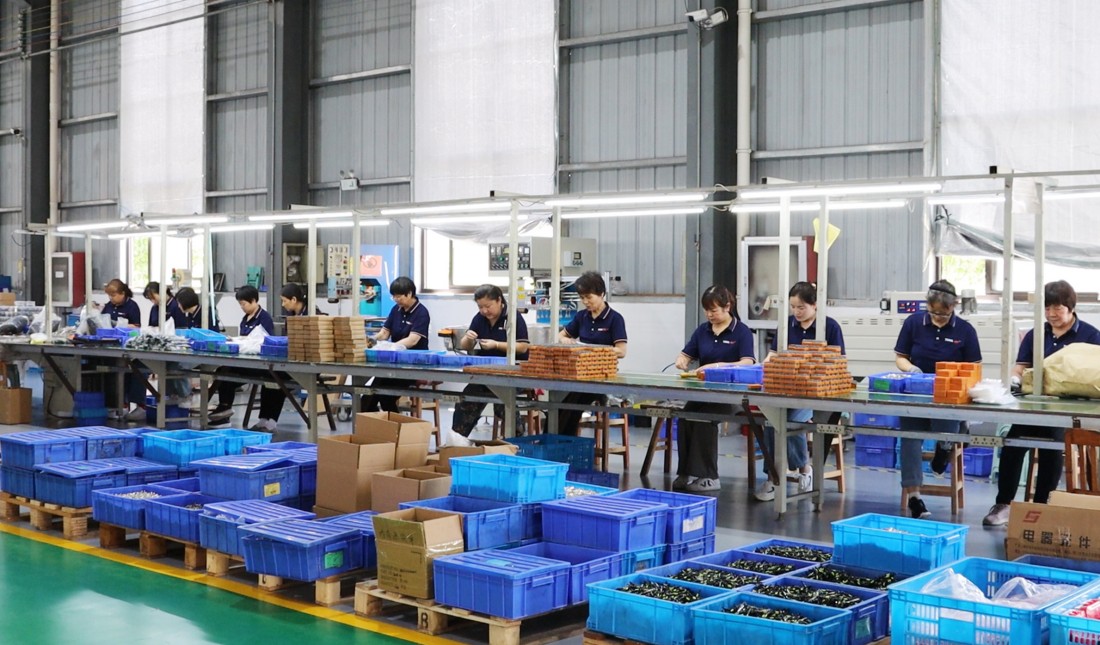
As products move through CNC machining, heat treatment, surface finishing, and assembly, dimensional checks and process controls are applied at multiple stages. These controls ensure that tolerances remain stable not only within a single production batch, but also across different accessory types produced on shared manufacturing lines.
Typical monitoring activities include:
By collecting process data throughout production, deviations can be detected early. This allows corrective adjustments before minor variations accumulate into larger quality issues. Continuous monitoring supports both product reliability and production stability, which is essential for large-volume manufacturing.
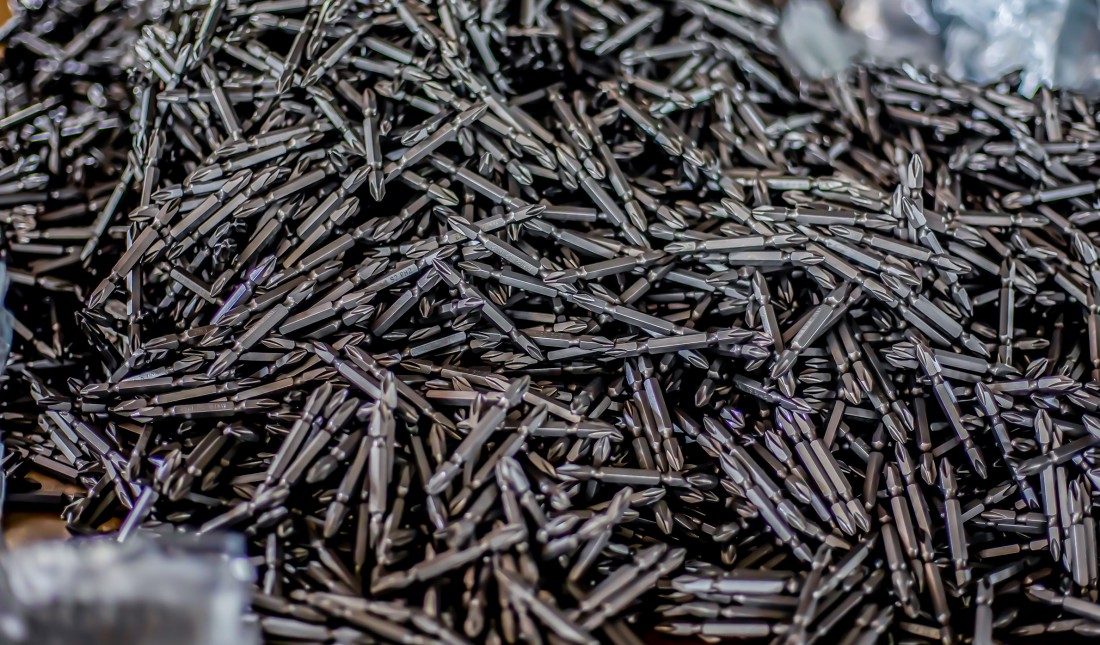
Laboratory testing plays an important role in quality control, particularly for verifying mechanical properties. However, the most valuable insights often come from testing that reflects real application scenarios rather than theoretical limits.
Rather than relying solely on static strength values, TOOLJOY evaluates accessories under conditions designed to simulate professional use. These tests focus on performance behavior over time and under repeated stress.
Common evaluations include:
The objective is not simply to pass benchmarks, but to observe how performance changes after prolonged use. This approach helps identify wear patterns, stress concentration points, and potential failure modes that may not appear during short-duration tests. The results feed back into process optimization and product refinement.
For distributors and OEM partners, consistency across production batches is often more important than maximum performance metrics. Accessories delivered months apart must behave the same way in use to support branding, after-sales service, and customer confidence.
To support long-term supply programs, TOOLJOY emphasizes batch-to-batch control through structured quality management practices, including:
This systematic approach reduces uncertainty for partners managing inventory, packaging, and market positioning. Predictable batch performance helps prevent field complaints and reduces the risk associated with scaling supply across different markets or projects.

Managing quality across a full portfolio of power tool accessories requires coordination between processes rather than isolated inspections.
Bits, drill bits, extension rods, and attachments often share production resources such as CNC machines, heat treatment furnaces, and finishing lines. Quality control standards are therefore designed to apply across product lines while still allowing for category-specific requirements. This unified framework improves efficiency, reduces internal variation, and ensures consistent manufacturing discipline.
For customers sourcing multiple accessory categories from a single supplier, this approach offers clear advantages. It delivers consistent manufacturing philosophy, predictable quality expectations, and simplified supplier management. Products across different categories are aligned in performance stability, even though their functional requirements differ.
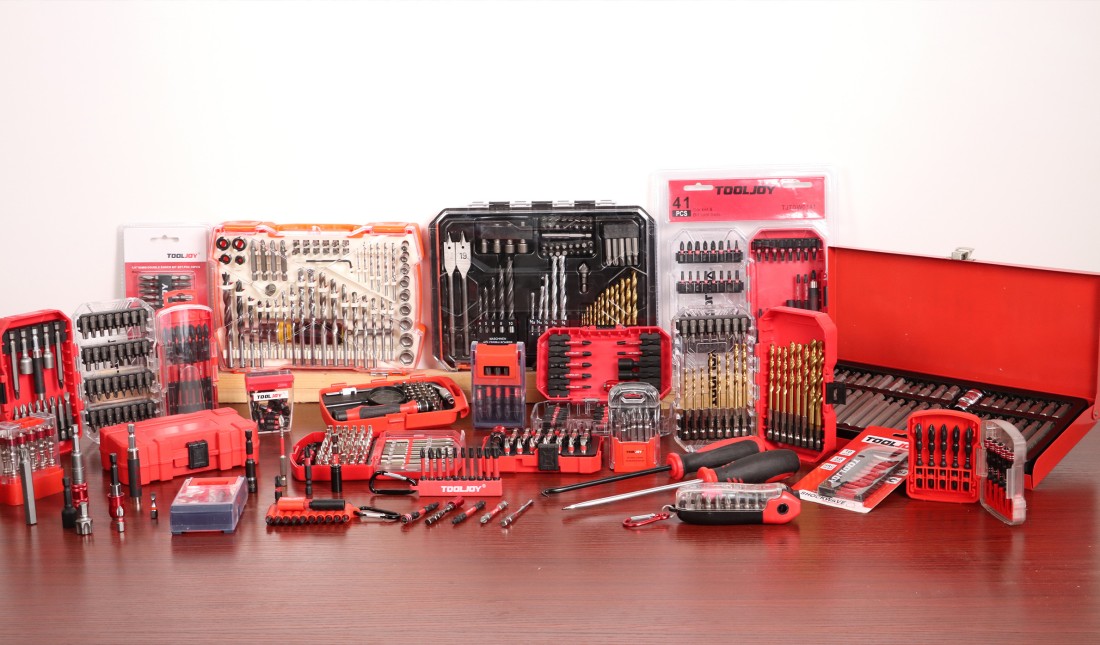
As TOOLJOY moves forward beyond 2026, quality control remains a core focus—not as a marketing slogan, but as a practical foundation for sustainable manufacturing and long-term cooperation.
By integrating material evaluation, in-process monitoring, real-use performance testing, and batch consistency management, TOOLJOY continues to strengthen its ability to deliver dependable power tool accessories at scale. This integrated quality system supports both product reliability and supply stability.
For distributors, OEM partners, and professional users, this means accessories designed to perform predictably across applications, environments, and production cycles. More importantly, it means confidence not just in individual products, but in every order placed—today and in the years ahead.
 Hot News
2026-09-25
2026-09-17
2026-09-10
2026-09-05
2026-09-01
2026-08-26
 EN
EN