Requesting a Call:
+86-17705556919
Online Support
Requesting a Call:
Online Support

When discussing impact bit durability, one question comes up repeatedly:
Why do some bits wear out after a relatively small number of screws, while others continue performing far longer under the same conditions?
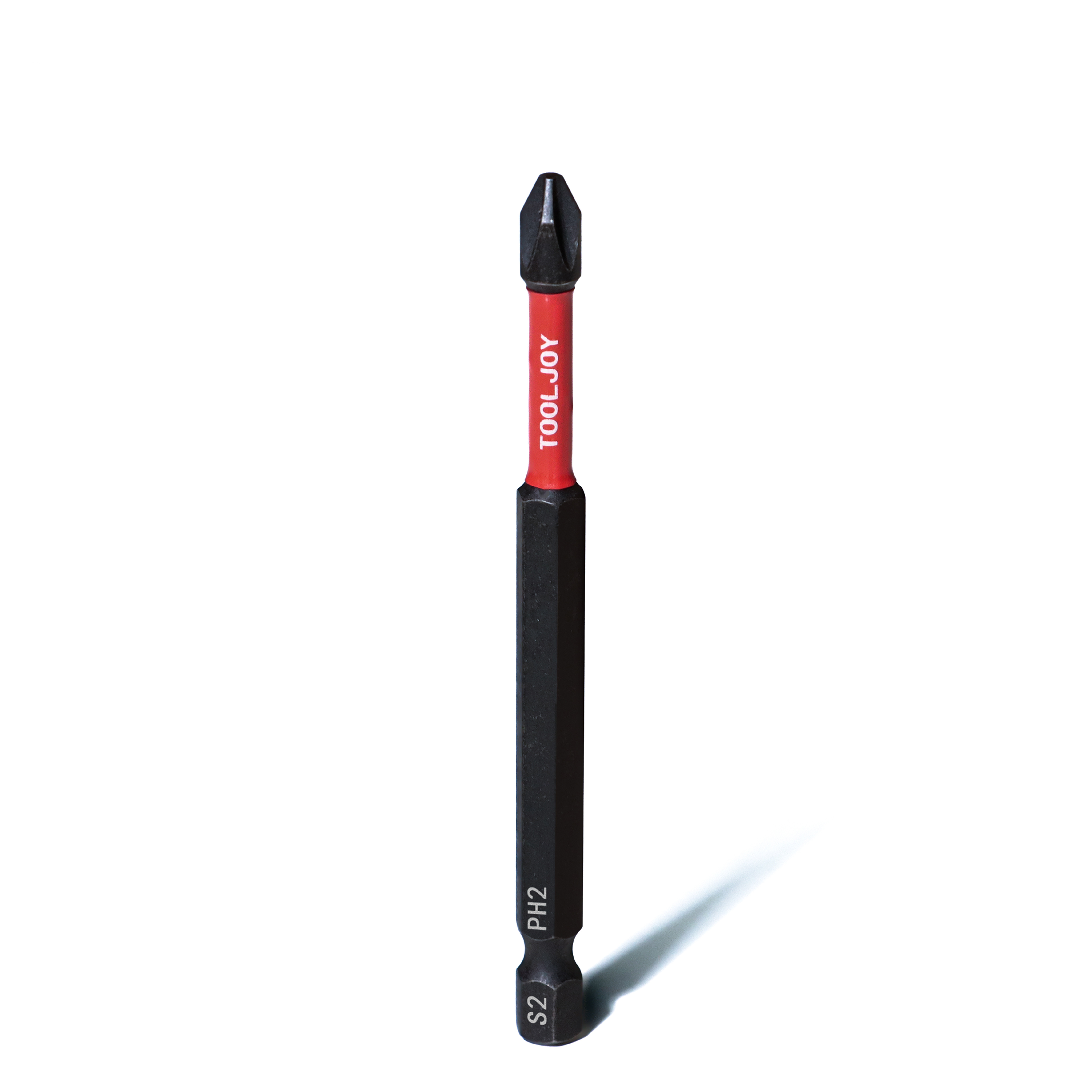
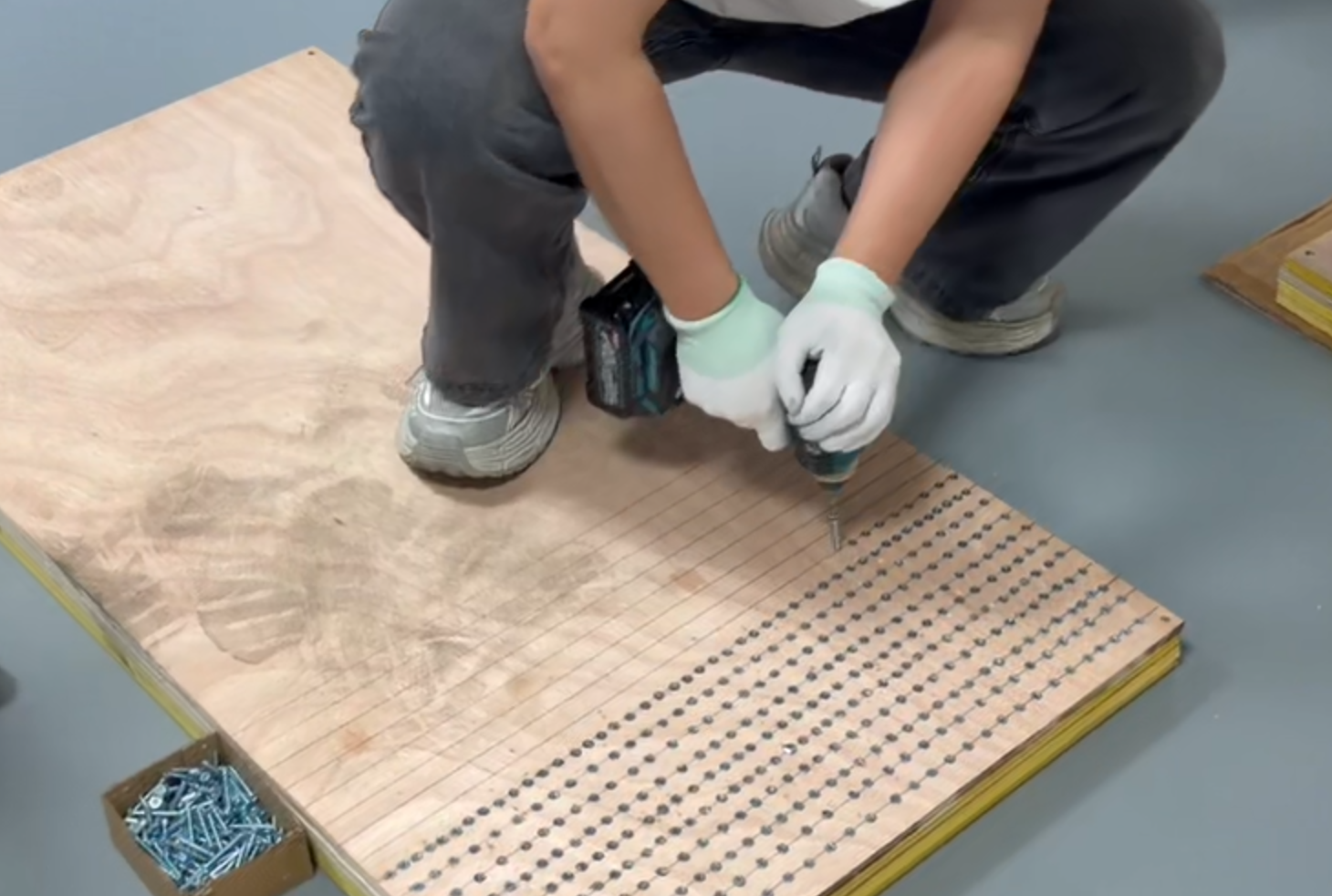
Recently, we conducted a long-screw fastening test using a torsion impact bit and 45mm screws driven continuously into multi-layer plywood.
After more than 400 fastening cycles, the bit remained functional with no major tip failure.
This result highlights an important fact:
The lifespan of an impact bit depends on much more than the steel grade printed on the package.
For professional users, contractors, and tool distributors, understanding what affects bit durability can help reduce replacement costs and improve fastening efficiency on the jobsite.
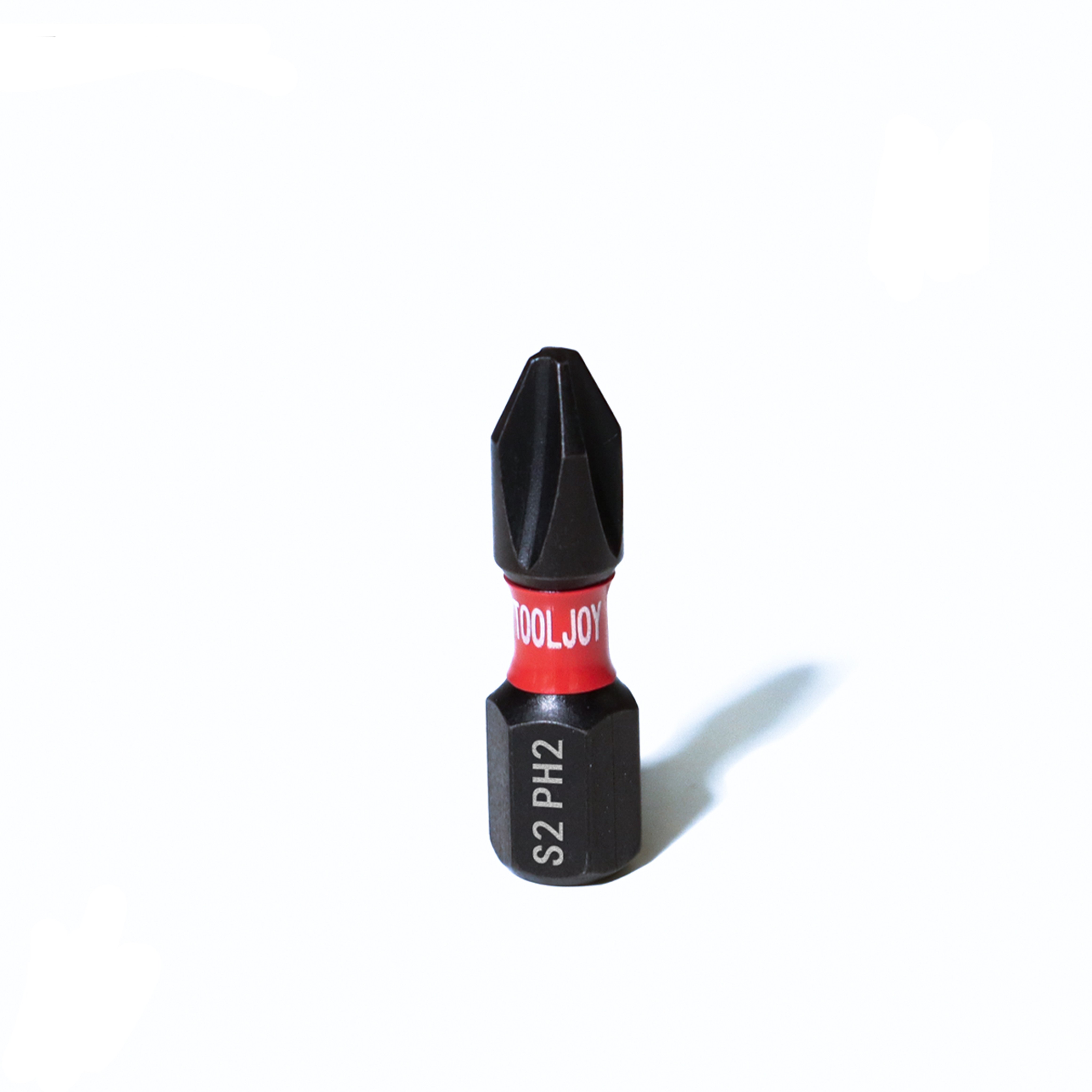
Most impact bits today are marketed as being made from S2 steel.
While S2 steel is widely accepted as a suitable material for impact bits, actual performance can vary significantly between manufacturers.
In our durability test, a 45mm screw was repeatedly driven into stacked plywood using an impact driver.
This type of test generates continuous impact loads, repeated torque spikes, and significant stress on both the tip and torsion zone.
Unlike laboratory measurements, long-screw testing closely reflects real working conditions encountered in construction, woodworking, and installation projects.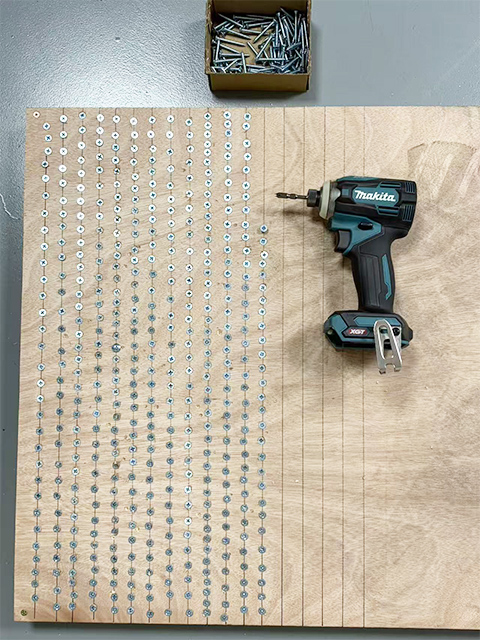
A common assumption is that all S2 steel impact bits should perform similarly.
In practice, that is rarely the case.
We have seen bits produced from the same steel grade deliver completely different results during long-screw applications.
The reason is simple:
Steel is only the starting point.
Durability is ultimately determined by how that steel is processed, heat treated, machined, and inspected throughout production.
Two impact bits may both be labeled "S2 steel," yet their service life can differ dramatically under identical working conditions.
Heat treatment is one of the most critical factors affecting impact bit lifespan.
An impact bit that is excessively hard may initially resist wear but become more vulnerable to chipping or cracking under repeated impact loads.
A bit that is too soft may resist breakage but quickly lose tip geometry and fastening performance.
The goal is to achieve the right balance between:
For impact applications, balance is often more important than maximum hardness.
This is why professional-grade impact bits typically undergo carefully controlled heat-treatment processes rather than simply targeting the highest hardness value possible.
Driving short screws into soft materials places relatively little stress on an impact bit.
Long screws tell a different story.
As screw length increases, resistance rises throughout the fastening process.
The bit experiences:
Weaknesses that might remain unnoticed during light-duty work often become obvious during long-screw applications.
This is one reason why many manufacturers and professional users rely on long-screw testing when evaluating bit durability.
Even high-quality steel cannot compensate for poor tip accuracy.
A precisely machined tip allows better engagement with the screw recess and improves torque transfer efficiency.
Benefits include:
When tip tolerances are inconsistent, the bit tends to slip under load, accelerating wear and increasing the risk of screw damage.
Over hundreds of fastening cycles, small dimensional differences can have a significant impact on durability.
Modern impact bits are designed to absorb repeated impact energy.
The torsion zone acts as a controlled flex area between the tip and the shank.
Rather than transferring every torque spike directly to the tip, the torsion zone helps distribute stress throughout the bit.
This can reduce:
In demanding fastening applications, an effective torsion design often contributes significantly to overall bit lifespan.
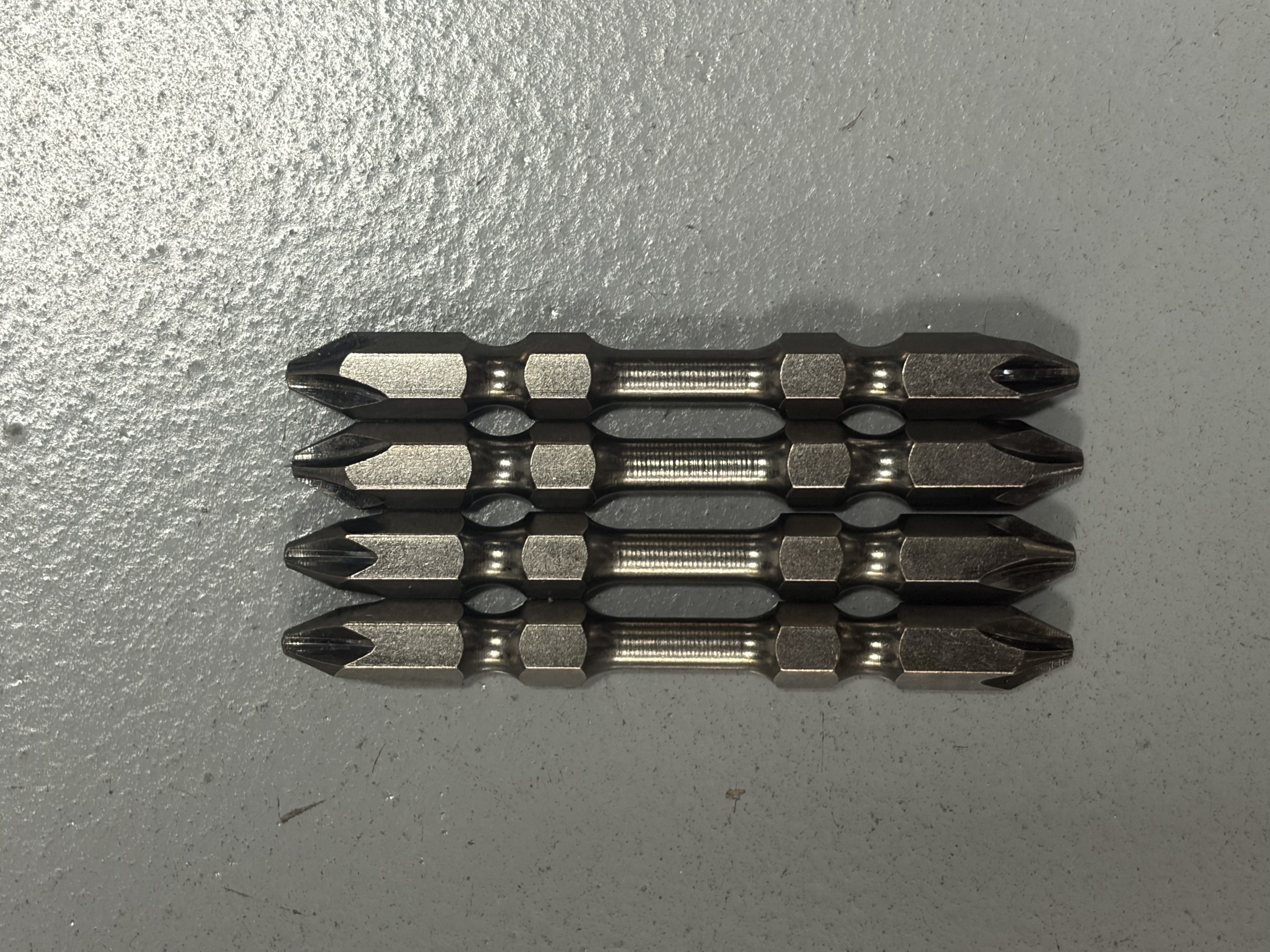
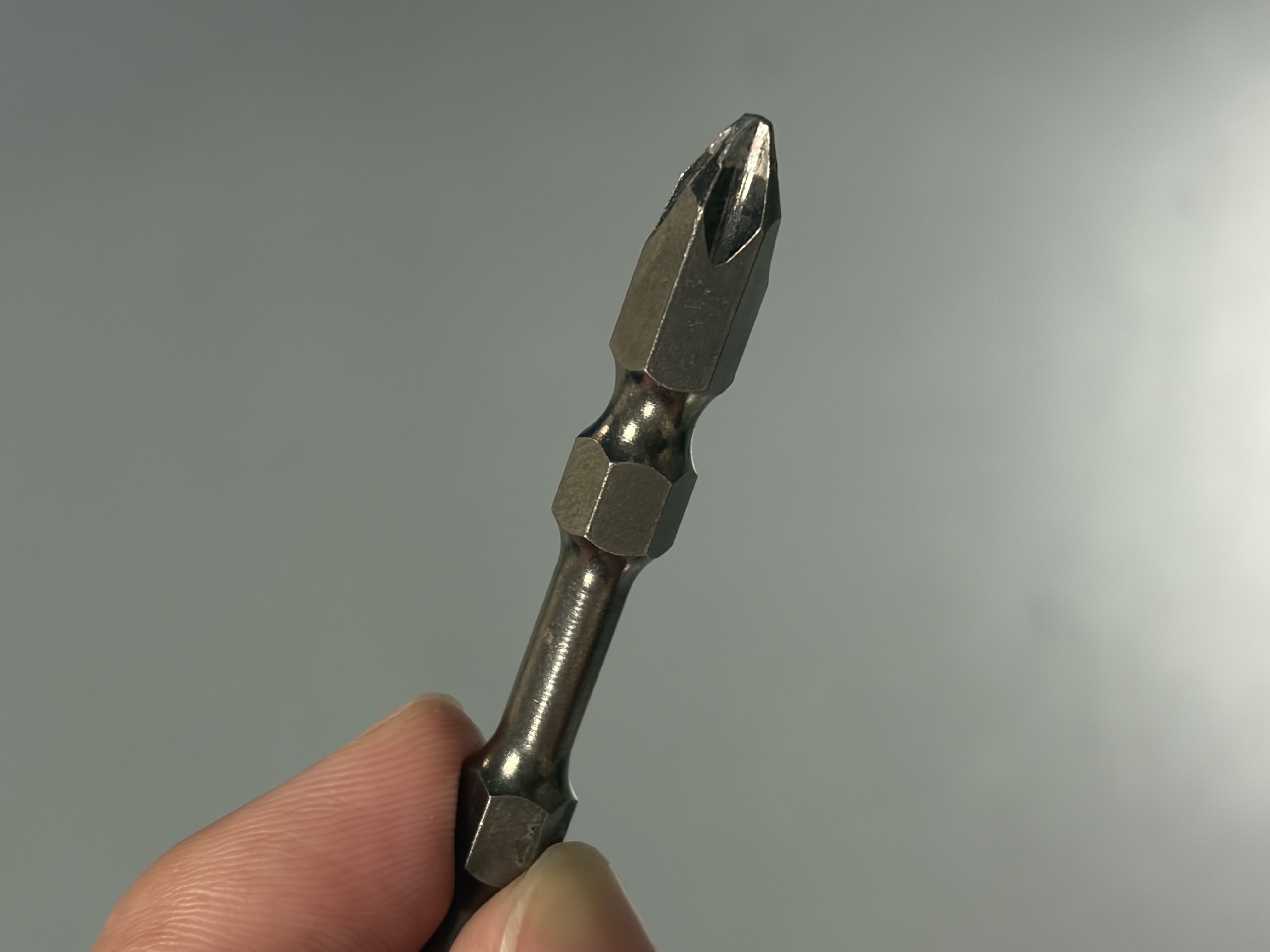
When an impact bit reaches the end of its service life, failure often appears gradually before complete breakage occurs.
Common signs include:
The bit no longer engages securely with the screw recess.
Frequent slipping during fastening leads to reduced efficiency and damaged screws.
Repeated stress cycles can eventually create visible fatigue cracks.
Under heavy impact loads, weakened tips may fracture completely.
Regular inspection helps identify wear before productivity is affected on the jobsite.
There is no universal number.
Service life depends on several factors, including:
However, in demanding long-screw applications, a quality impact bit should maintain stable performance through hundreds of fastening cycles rather than failing prematurely after a limited number of screws.
For this reason, many professional users evaluate impact bits based on real-world durability rather than advertised specifications alone.
On paper, many impact bits look similar.
In actual fastening work, the differences become obvious.
Long-screw testing remains one of the most effective ways to evaluate whether an impact bit is built for professional use or simply designed to meet a specification sheet.
The goal is not to achieve the highest theoretical hardness or advertise the strongest material.
The goal is consistent performance under real working conditions.
When an impact bit continues driving long screws after hundreds of fastening cycles, it demonstrates what matters most: durability that can be relied upon throughout the job.
A: Premature failure is often caused by improper heat treatment, poor tip accuracy, insufficient torsion design, or excessive torque loads during fastening.
A: No. S2 steel is widely used in impact bits, but heat treatment, machining accuracy, and manufacturing consistency have a major influence on durability.
A: Continuous long-screw driving tests in materials such as multi-layer plywood are widely considered one of the most practical methods for evaluating real-world performance.
A: Torsion zones help absorb impact energy and reduce stress concentration, which can extend service life in demanding impact-driver applications.
 Hot News
2026-09-17
2026-09-10
2026-09-05
2026-09-01
2026-08-26
2026-08-26
 EN
EN