Requesting a Call:
+86-17705556919
Online Support
Requesting a Call:
Online Support

Premature screwdriver bit failure is a common problem in construction, metal fabrication, equipment assembly, and maintenance work. In many cases, broken or worn bits are not caused by a manufacturing defect alone, but by a combination of excessive torque, incorrect bit selection, and demanding fastening conditions.
As impact drivers become more powerful, fastening tools place greater stress on screwdriver bits than ever before. Contractors and industrial users now pay closer attention to bit material, torsion resistance, and long-term durability during repetitive fastening work.
Using the Wrong Bit Type
One of the most common reasons bits fail early is using standard screwdriver bits in impact applications.
Standard bits are designed for regular screwdriving tasks, while impact drivers generate repeated rotational force and vibration. Under continuous heavy torque, ordinary bits may crack, twist, or wear rapidly around the tip area.
Incorrect bit selection can also reduce fastening stability. Common examples include:
Poor engagement between the bit and screw head often leads to cam-out, uneven pressure, and accelerated wear.
In roofing installation, metal framing, and production assembly work, improper bit matching can significantly shorten tool lifespan during repetitive fastening cycles.
Excessive Torque and Continuous Load
Overloading is another major cause of screwdriver bit damage.
In industrial environments, operators sometimes continue applying force after the screw is fully seated. This places unnecessary stress on both the bit tip and shank. Repeated overload conditions can eventually lead to cracking or snapping.
Continuous high-speed fastening also generates heat through friction and repeated impact. During steel framing or sheet metal installation, excessive heat buildup can gradually reduce surface hardness and increase wear rates.
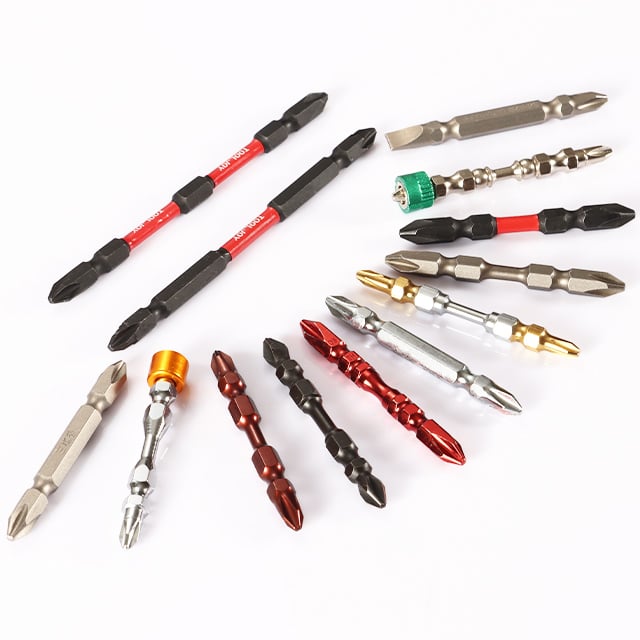
To reduce stress during heavy-duty fastening, many professionals use impact-rated bits with torsion zones. These flexible sections help absorb part of the rotational shock generated by impact drivers.
Steel Quality, Heat Treatment, and Surface Finish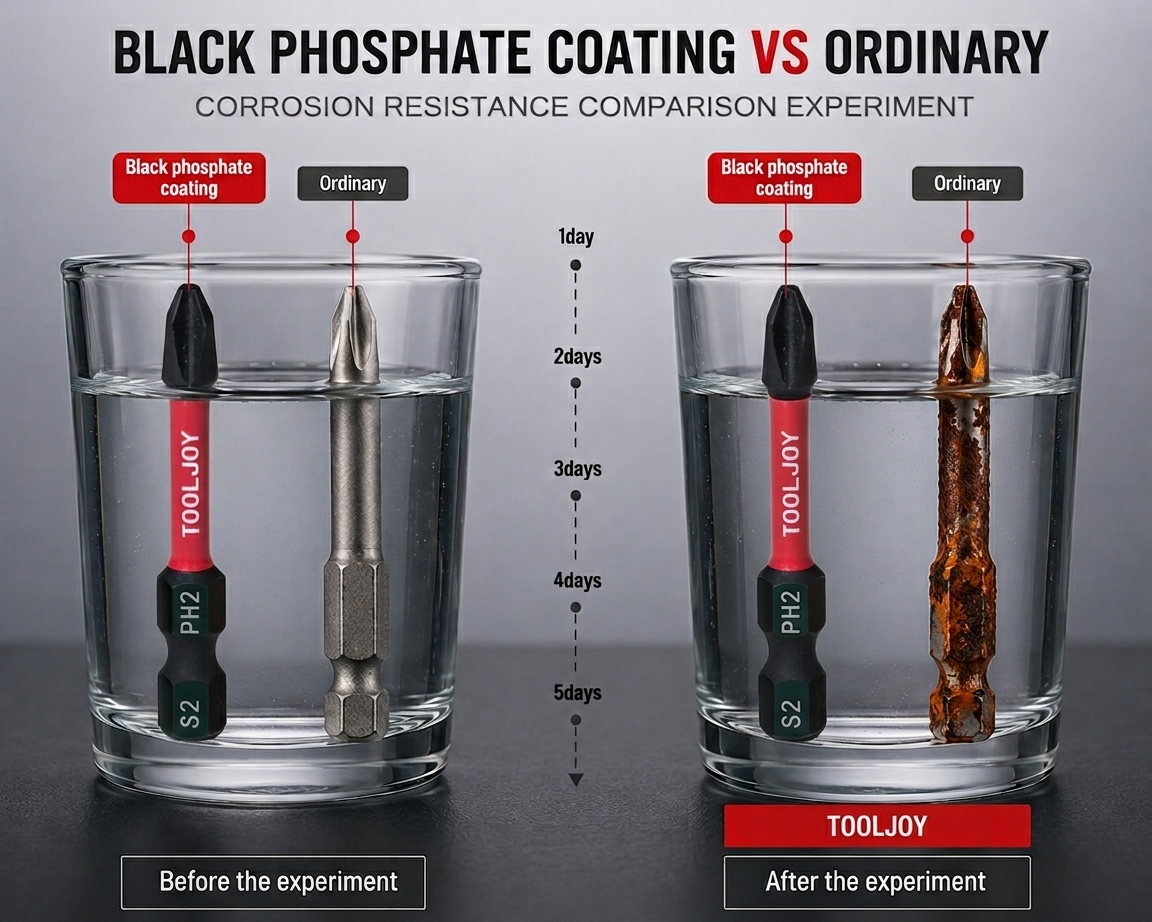
Material quality directly affects screwdriver bit durability.
Low-grade steel may achieve high hardness but lack sufficient toughness, making the bit more vulnerable to sudden fracture under impact load. Professional-grade screwdriver bits commonly use S2 steel because it offers a balanced combination of hardness, wear resistance, and toughness.
Proper heat treatment is equally important. If a bit becomes too hard during hardening, it may crack under repeated impact. If hardness is too low, the tip can wear quickly during continuous fastening work. Maintaining a balanced combination of hardness and toughness is critical for impact applications.
Surface finish also affects long-term performance. Many industrial bits use black phosphate coating to improve corrosion resistance and reduce surface wear in demanding jobsite environments.
Some professional-grade bits additionally use sandblasted finishes to improve surface grip and reduce slipping during fastening.
Difficult Fastening Conditions Increase Bit Stress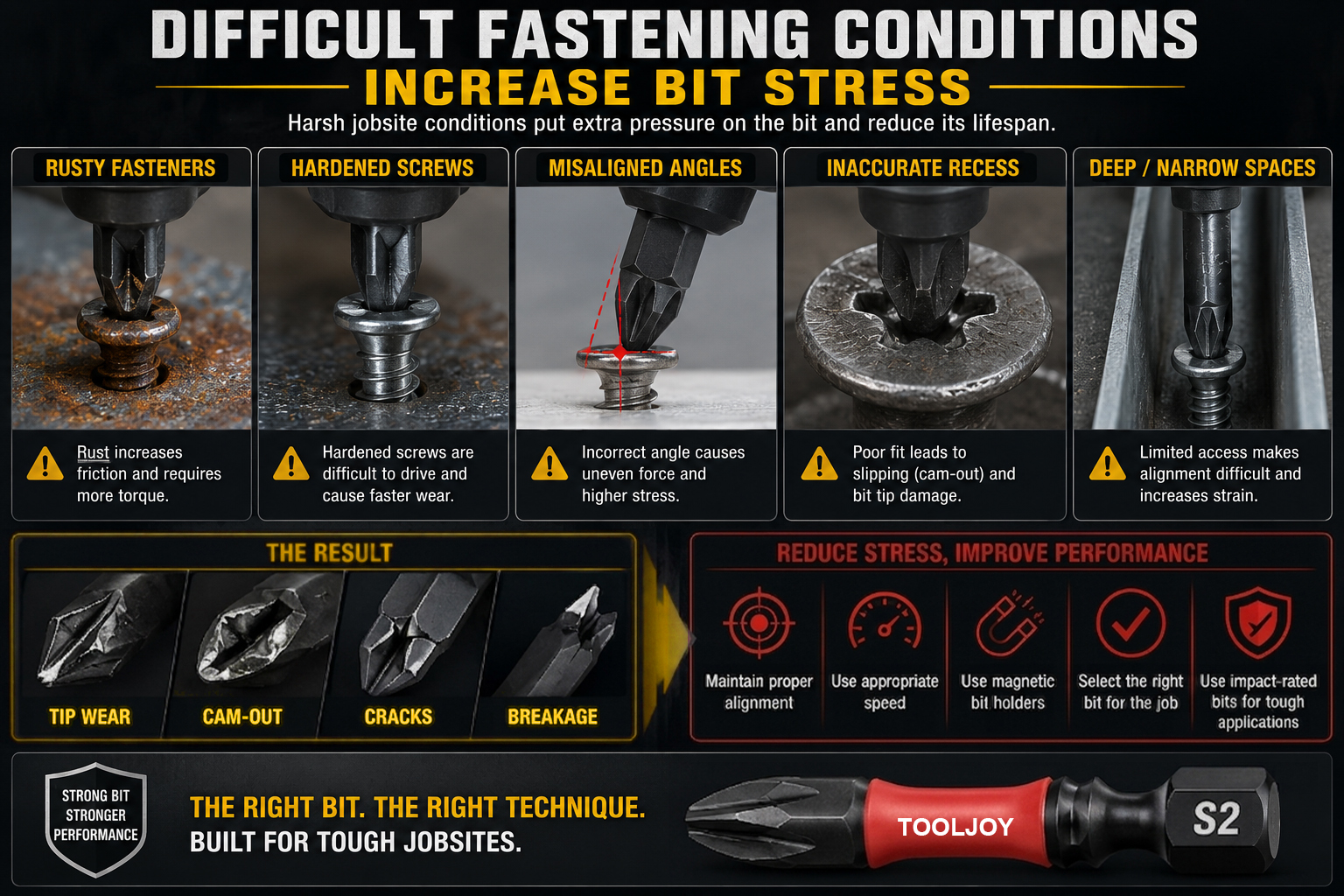
Bit lifespan is also closely related to actual jobsite conditions.
Rusty fasteners, hardened screws, and misaligned driving angles all place additional pressure on the bit tip. Inaccurate screw recess dimensions can further reduce contact stability and increase slipping during fastening.
Maintaining proper alignment and using suitable fastening speed helps improve torque transfer efficiency while reducing unnecessary wear.
For repetitive assembly work, magnetic bit holders are often used to improve screw retention and fastening control, especially in confined or overhead working positions.
How to Extend Screwdriver Bit Lifespan
Several practical steps can help reduce premature bit wear in industrial applications:
Proper tool selection and fastening technique often improve bit lifespan more effectively than simply increasing hardness.
Common Screwdriver Bit Problems and Causes
| Problem | Possible Cause |
| Tip wear | Incorrect screw type or excessive slipping |
| Bit snapping | Excessive torque or brittle material |
| Cam-out | Poor bit fit or worn screw recess |
| Twisting | Standard bits used in impact drivers |
| Rapid wear | Continuous high-speed fastening |
Screwdriver bit failure is usually related to application conditions, torque load, material quality, and bit selection rather than a single issue.
In demanding fastening environments such as construction, metalworking, and industrial assembly, impact-rated S2 steel bits are widely preferred because they provide better balance between toughness, wear resistance, and fastening stability during repetitive heavy-duty use.
 Hot News
2026-09-17
2026-09-10
2026-09-05
2026-09-01
2026-08-26
2026-08-26
 EN
EN